



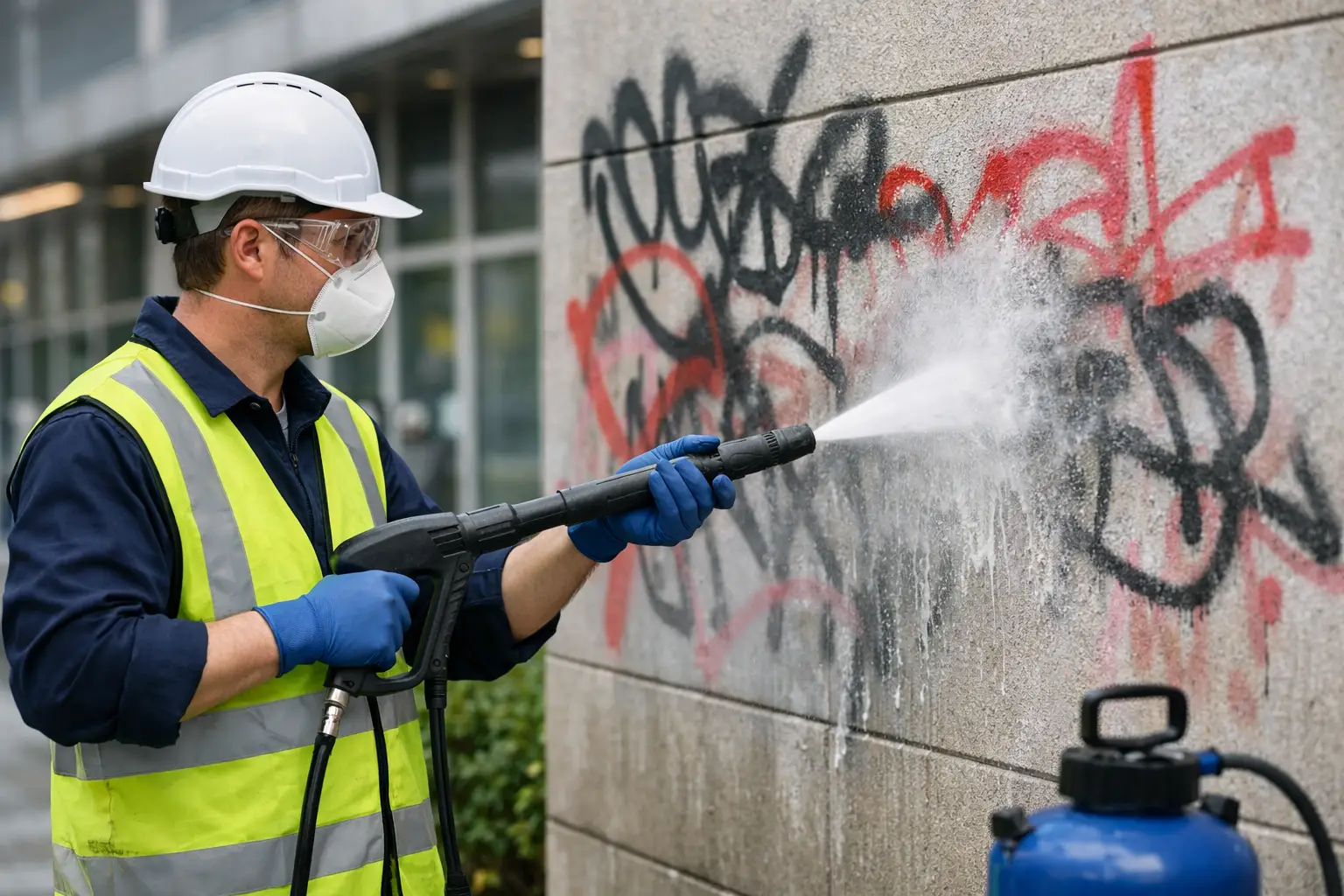
A graffiti tag on a storefront wall, loading dock door, or parking structure is not just a cosmetic issue. It can affect tenant confidence, customer perception, security expectations, and the overall condition of the asset. Knowing how to remove graffiti safely means treating the work as a controlled surface-restoration task, not simply applying a chemical and pressure washing the area.
For commercial properties, the correct approach protects the underlying material, keeps runoff out of drainage systems, maintains safe pedestrian access, and documents the condition of the site. The fastest-looking method is not always the safest or most cost-effective one.
Start With Surface Identification and Site Control
Graffiti removal begins before any cleaner is applied. The same paint or marker can require a very different process on bare concrete, painted masonry, brick, metal panels, glass, stucco, vinyl, or a coated storefront surface. A remover that performs well on sealed concrete may discolor painted aluminum or pull color from a porous masonry coating.
Identify both the graffiti medium and the substrate. Spray paint, permanent marker, paint pen, adhesive residue, and etched graffiti do not respond the same way. Also determine whether the surface has a protective coating, clear sealer, anti-graffiti finish, paint system, or prior repair. When the finish is unknown, assume it may be vulnerable until a small test area proves otherwise.
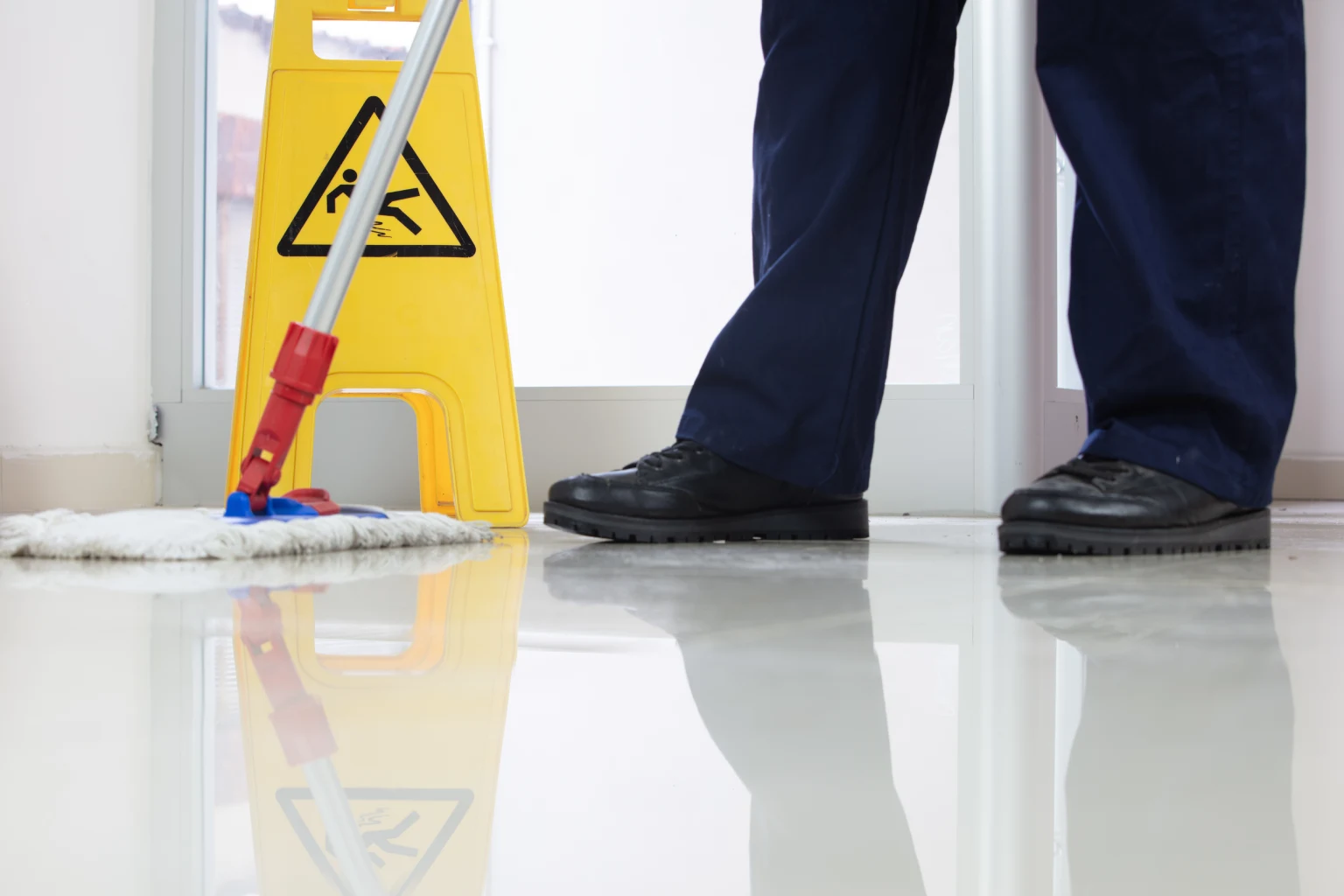
Site control is equally important. Establish a work perimeter before cleaning begins, particularly at active retail centers, office properties, schools, industrial facilities, and public-facing storefronts. Use cones, barricades, wet-floor signage, or temporary access controls to keep pedestrians away from chemicals, hoses, and wet surfaces. Coordinate work around delivery windows, customer traffic, tenant hours, and loading activity where applicable.
A professional assessment should also identify nearby storm drains, landscaping, electrical equipment, glass, vehicles, painted signage, and air intakes. These conditions affect product selection, containment requirements, and the direction of rinsing.
How to Remove Graffiti Safely With a Test-First Process
The most reliable way to remove graffiti safely is to test the mildest effective method in an inconspicuous area. This is not a delay in the process. It is how crews avoid turning a removable tag into a larger repainting or restoration project.
Begin with a compatible graffiti remover selected for the surface and the marking material. Follow the product label and safety data sheet requirements for dilution, dwell time, personal protective equipment, ventilation, and disposal. Allowing a product to dwell long enough to soften the graffiti often reduces the need for aggressive scrubbing or high pressure.
After the test area has been treated, assess more than whether the graffiti faded. Check for color loss, gloss changes, shadowing, etching, surface softening, or uneven appearance after drying. A wet wall can hide damage that becomes obvious once the surface dries.
If the test performs correctly, continue in manageable sections. Apply the remover with controlled coverage, keep it off adjacent materials when possible, and use brushes or non-abrasive pads appropriate for the surface. Work from the bottom upward when applying cleaner to reduce streaking, then rinse in a controlled direction based on drainage and containment conditions.
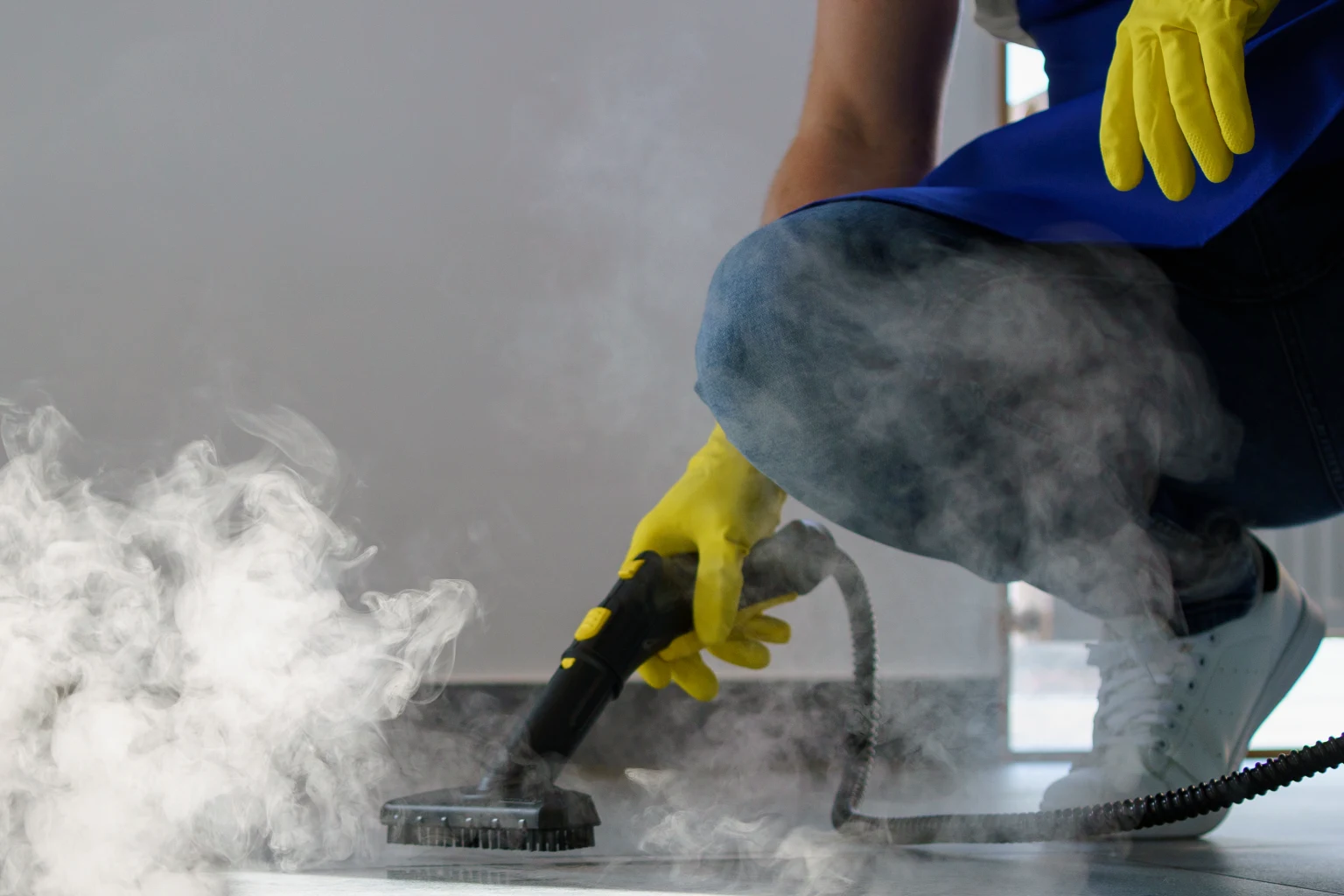
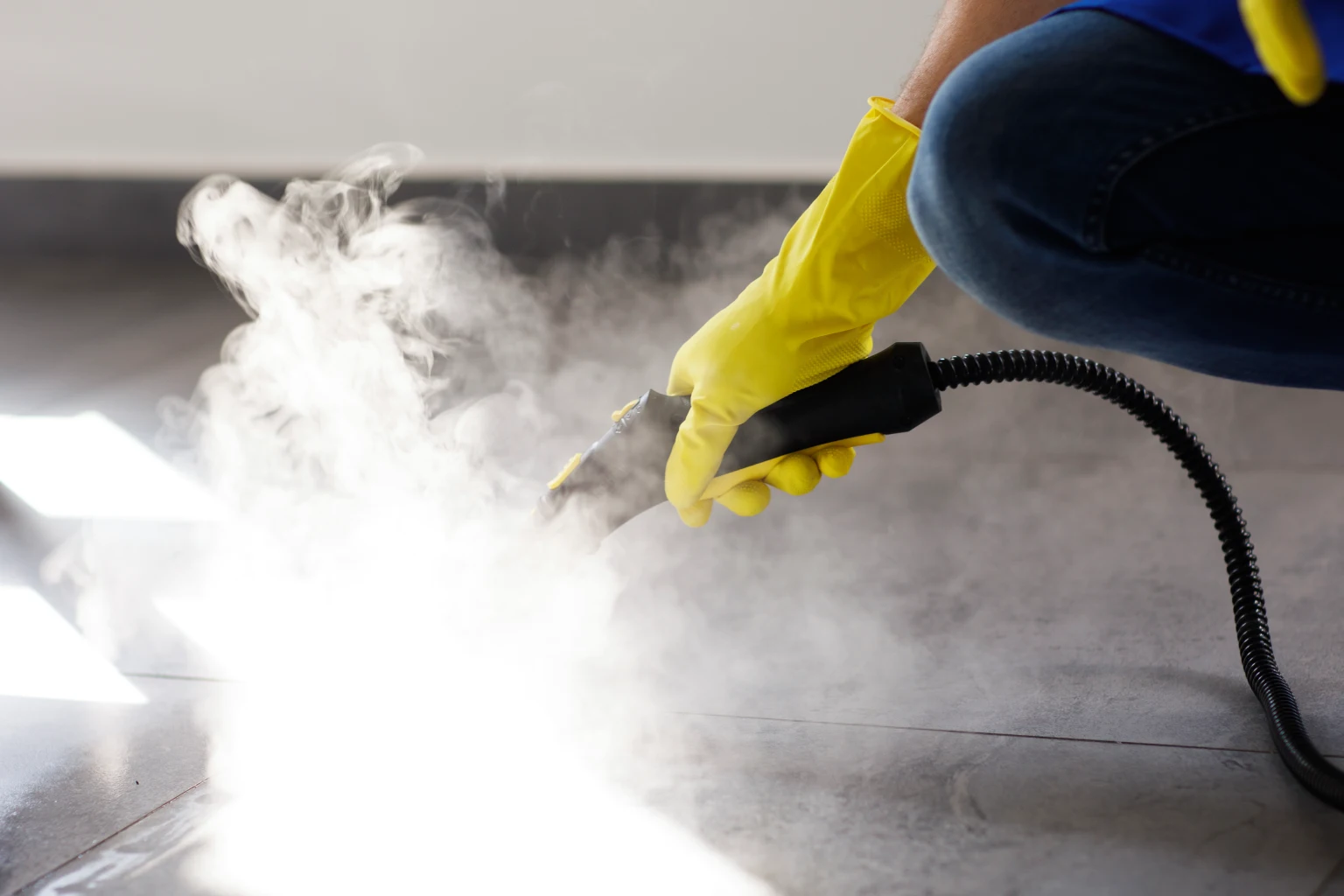
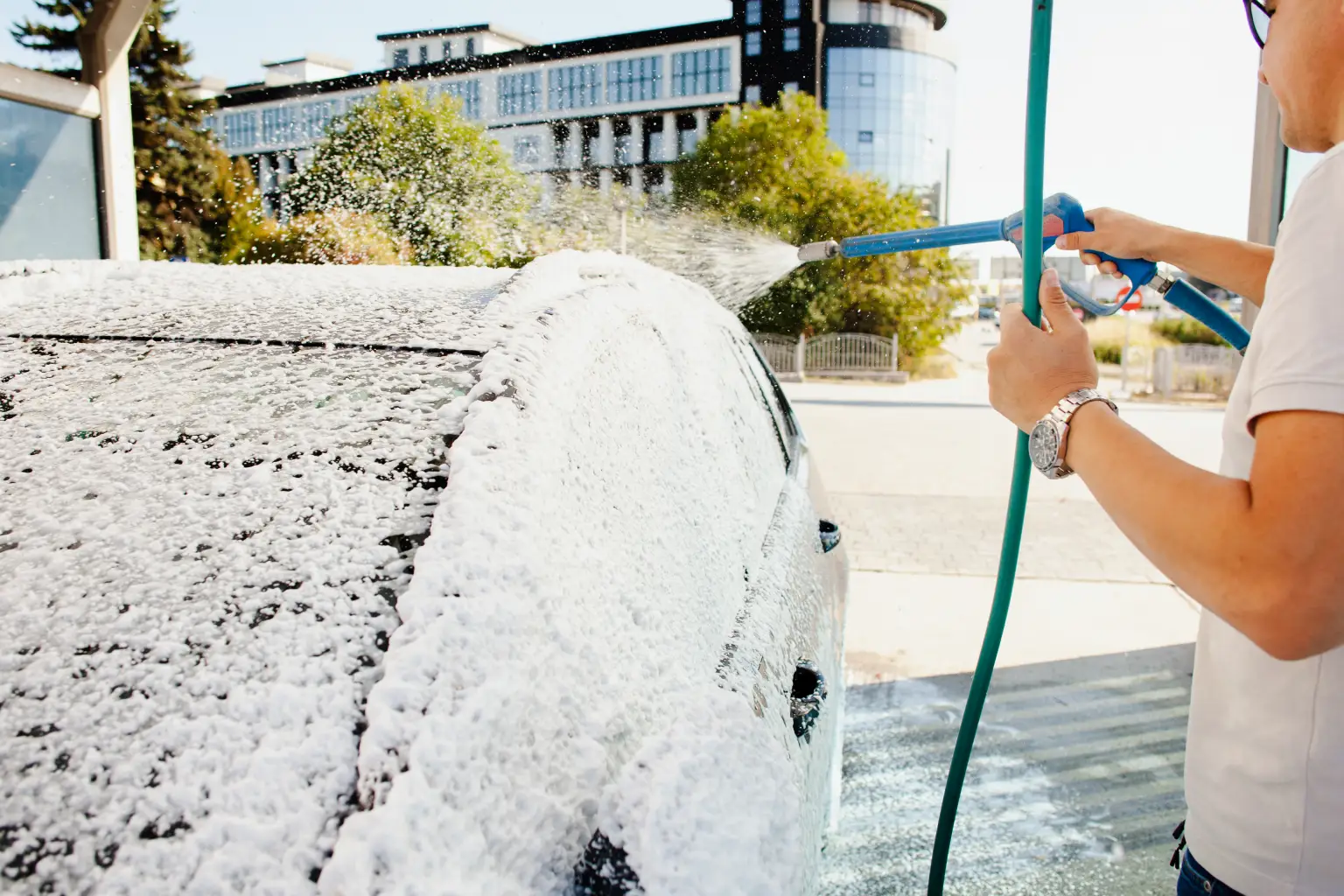
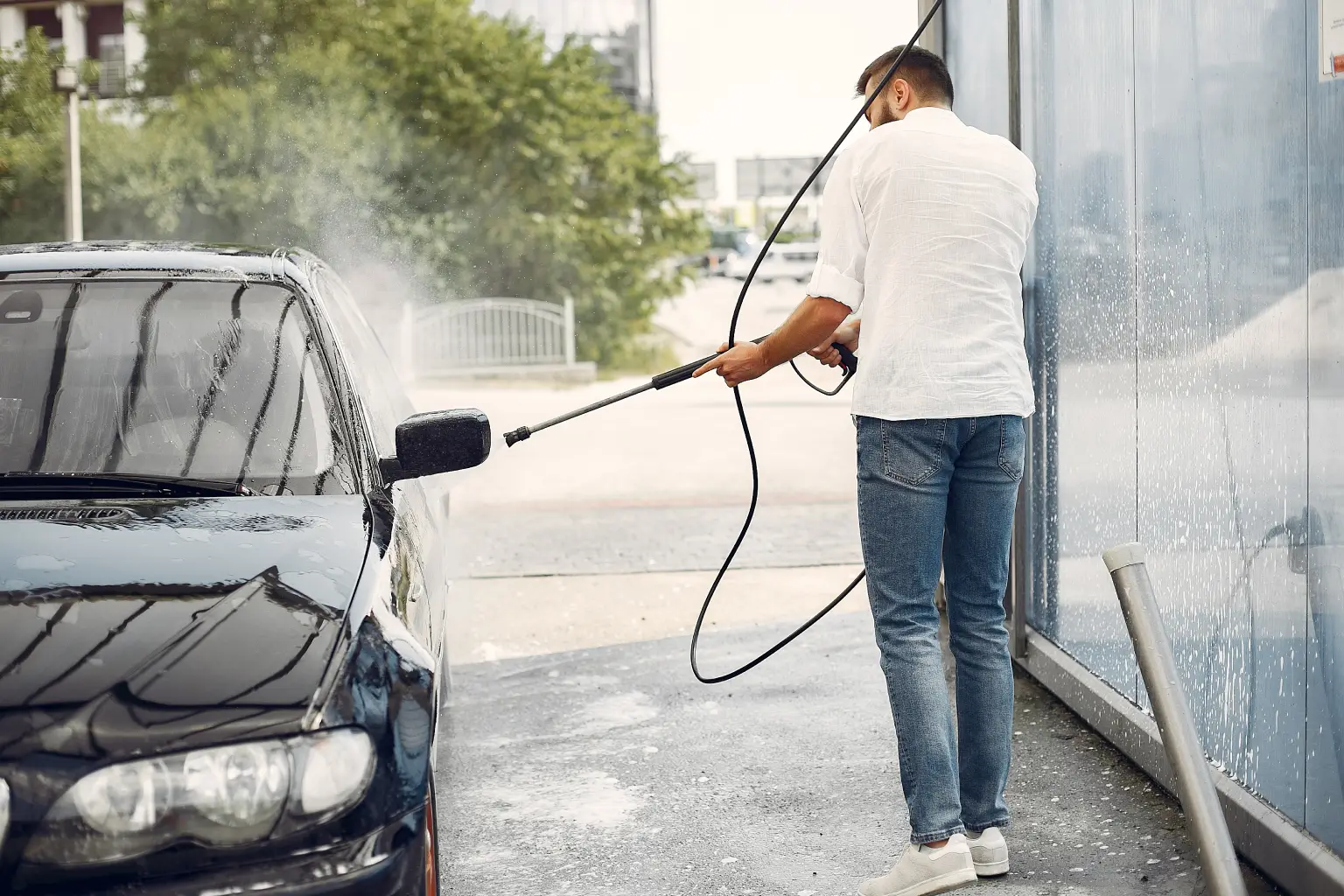
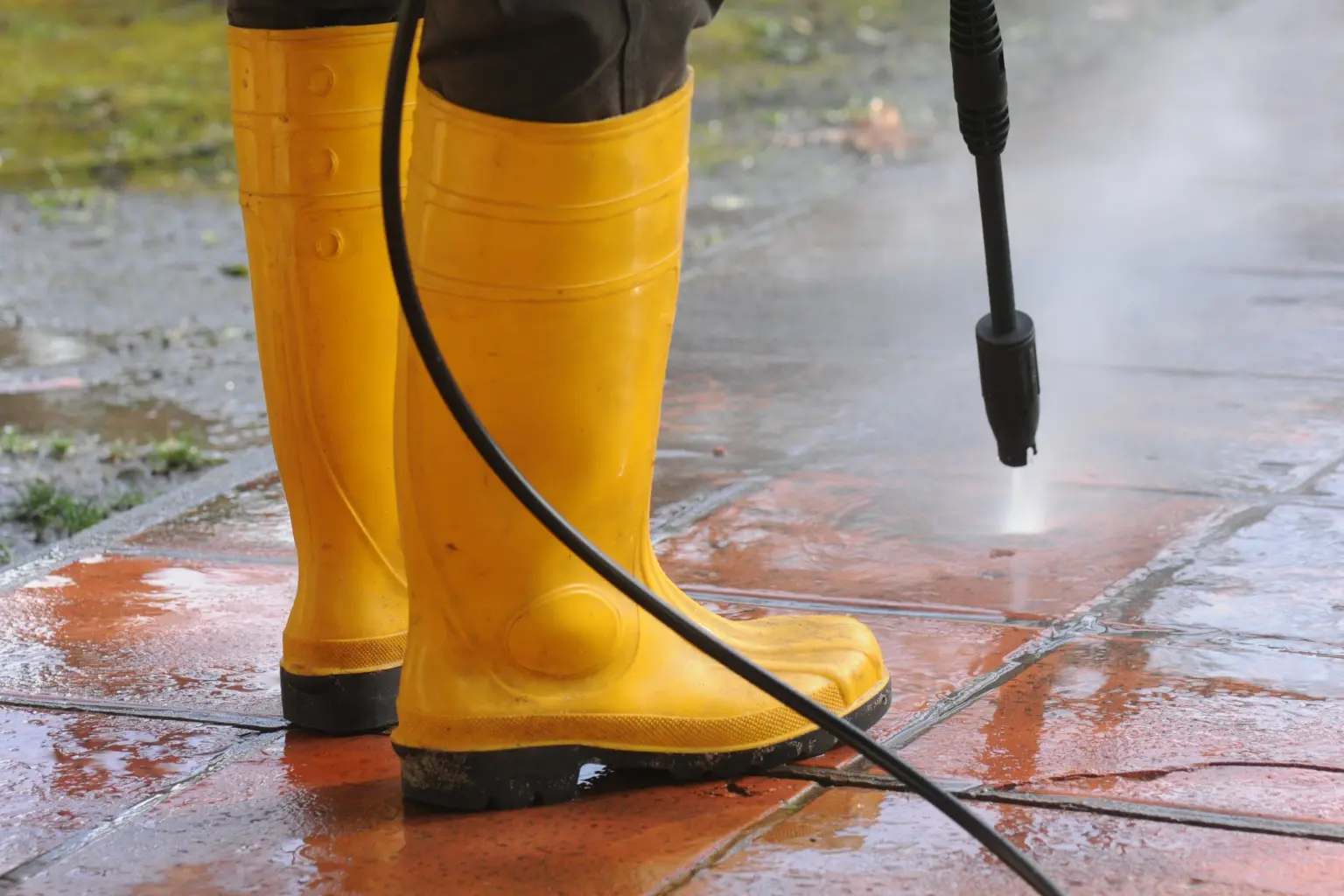
Pressure washing may be part of the process, but it should not be the default answer. Excessive pressure can scar concrete, strip paint, drive contaminants deeper into porous materials, damage mortar joints, force water behind panels, or leave visible cleaning patterns. Heat, flow rate, nozzle selection, stand-off distance, and pressure all need to be adjusted to the surface condition. Industrial-grade equipment is valuable only when it is operated with restraint and surface-specific judgment.
Match the Method to the Material
Commercial properties often contain several exterior materials within a few feet of one another. A tag may cross painted block, metal doors, concrete curbs, glass, and signage. Each material requires a separate decision.
Concrete and masonry
Bare concrete, CMU block, and brick are porous, which means paint can migrate below the visible surface. Removal may require repeated applications, agitation, low-to-moderate pressure rinsing, or hot-water cleaning. The trade-off is clear: stronger chemistry and higher pressure may remove more pigment, but they can also create a lighter “clean spot” that stands out from the surrounding weathered surface.
On historic brick, soft mortar, decorative stone, or coated masonry, the risk increases. These surfaces may need a more conservative restoration process, and complete removal may not be preferable if it causes permanent material loss.
Painted surfaces and metal panels
Painted metal, doors, roll-up doors, utility enclosures, and storefront frames can be vulnerable to solvent-based removers. A product may dissolve the graffiti while also dulling, streaking, or lifting the existing finish. In some cases, controlled removal followed by color-matched touch-up painting is the cleaner result.
Do not use abrasive pads, aggressive scraping tools, or uncontrolled pressure on coated metal. They can expose bare metal and create conditions for corrosion.
Glass, plastic, and signage
Glass can often tolerate different cleaning methods than painted surfaces, but graffiti may be etched rather than deposited on the surface. Acid etching, scratches, and permanent damage cannot be cleaned away with standard graffiti remover. Plastic panels, acrylic signs, and vinyl graphics are also easily clouded or scratched.
When graffiti affects branded signage or tenant-facing glass, isolate the material first. Replacing a damaged panel may be more cost-effective than repeated attempts that further degrade its appearance.
Control Runoff and Protect the Environment
Graffiti removal chemicals, loosened paint, rinse water, and debris should not be allowed to enter storm drains. On a commercial site, runoff management is part of safe execution, not an optional add-on.
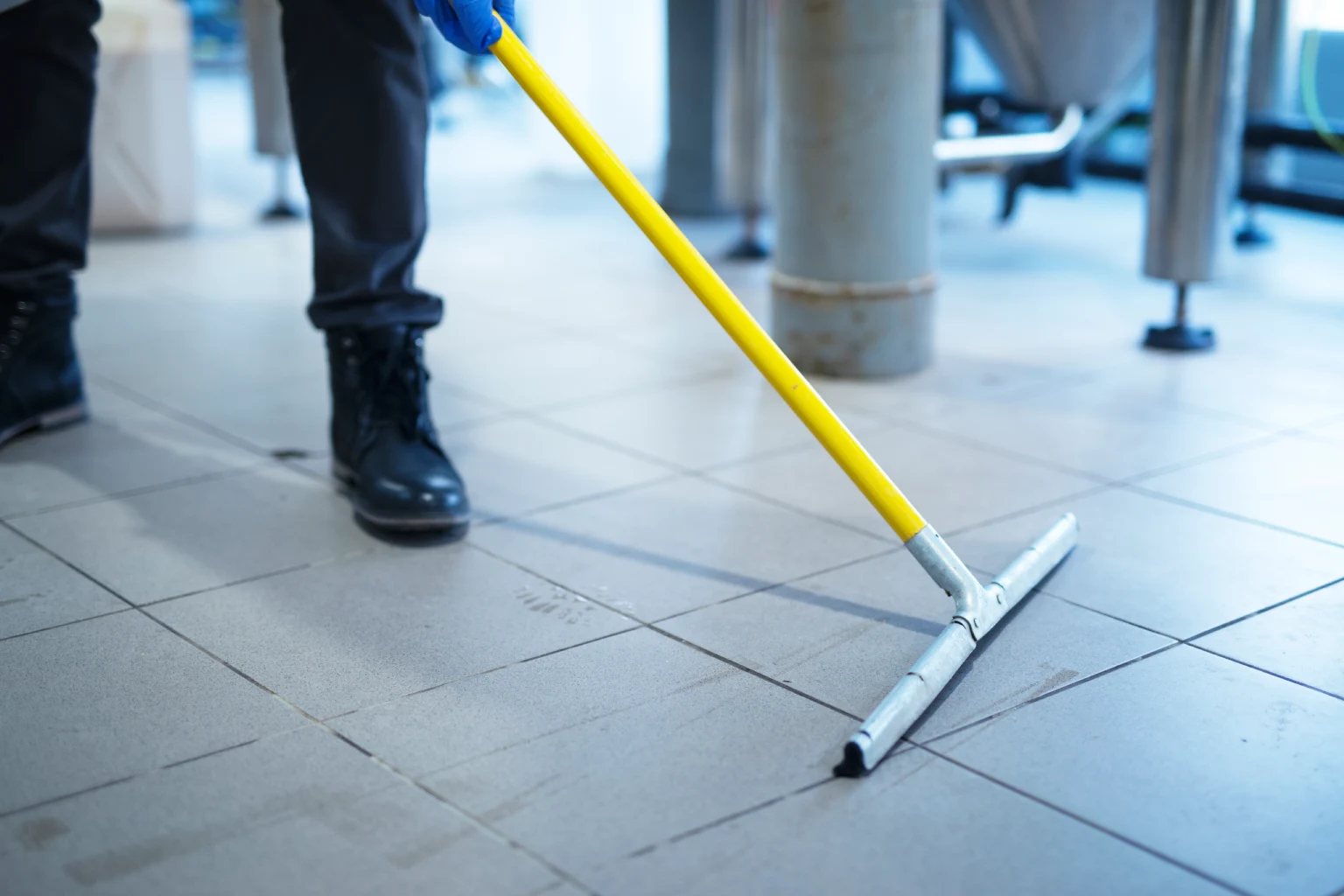
Before work begins, locate drainage paths and protect nearby inlets using appropriate containment measures. Capture or direct wastewater in accordance with property requirements and applicable local regulations. Avoid washing residue across sidewalks, parking lots, landscaped areas, or into traffic lanes simply because the tagged area is clean.
This is especially relevant around dumpster pads, loading docks, parking structures, and service corridors, where drains are common and surfaces may already contain oils, trash residue, or other contaminants. Combining graffiti removal runoff with existing site contaminants can create a larger environmental and operational problem.
Crews should also prevent overspray from reaching vehicles, storefront windows, landscaping, HVAC equipment, and adjacent tenant spaces. Wind conditions matter when applying chemicals. If conditions make controlled application impossible, rescheduling may be the safer decision.
Use the Right Personal Protective Equipment
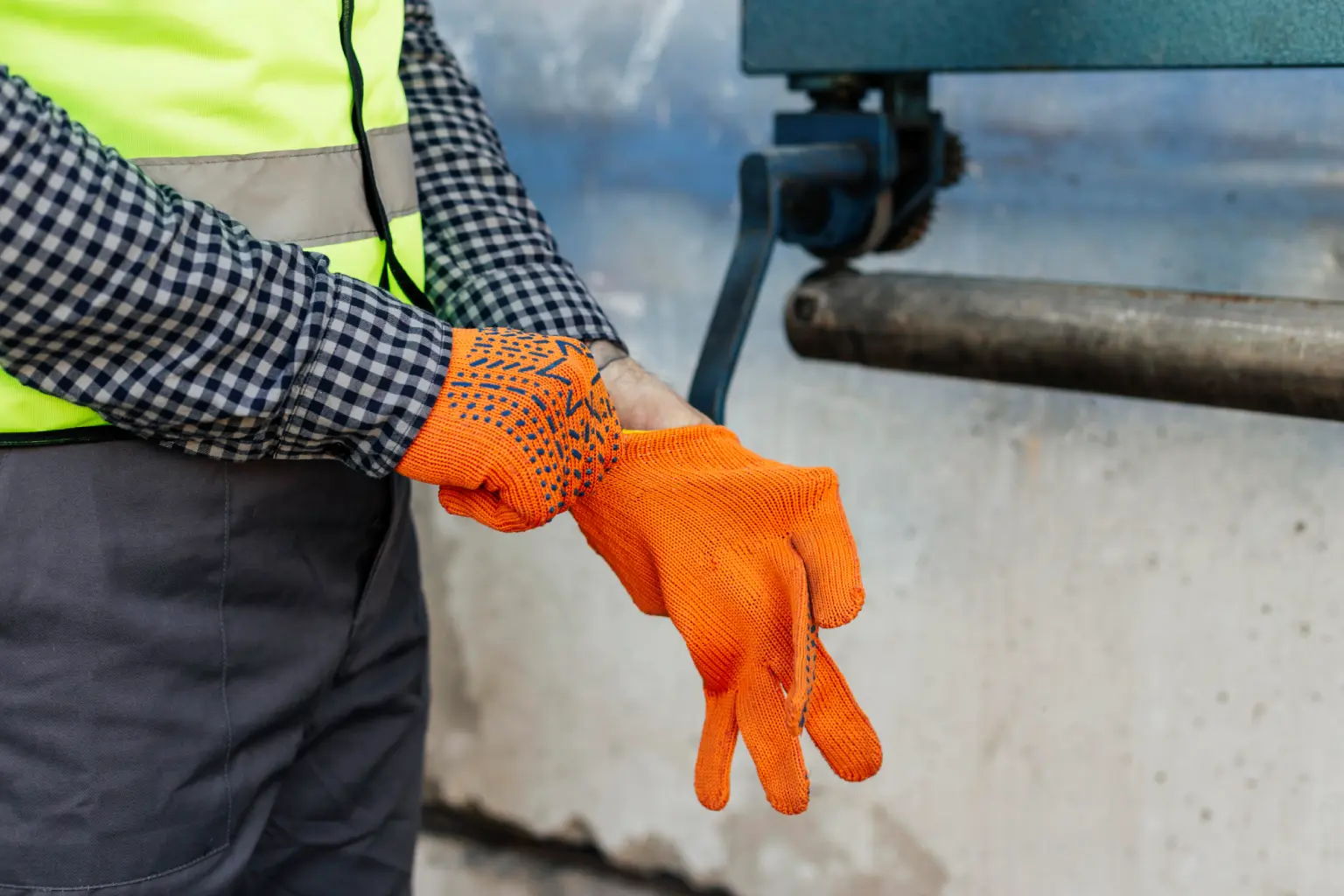
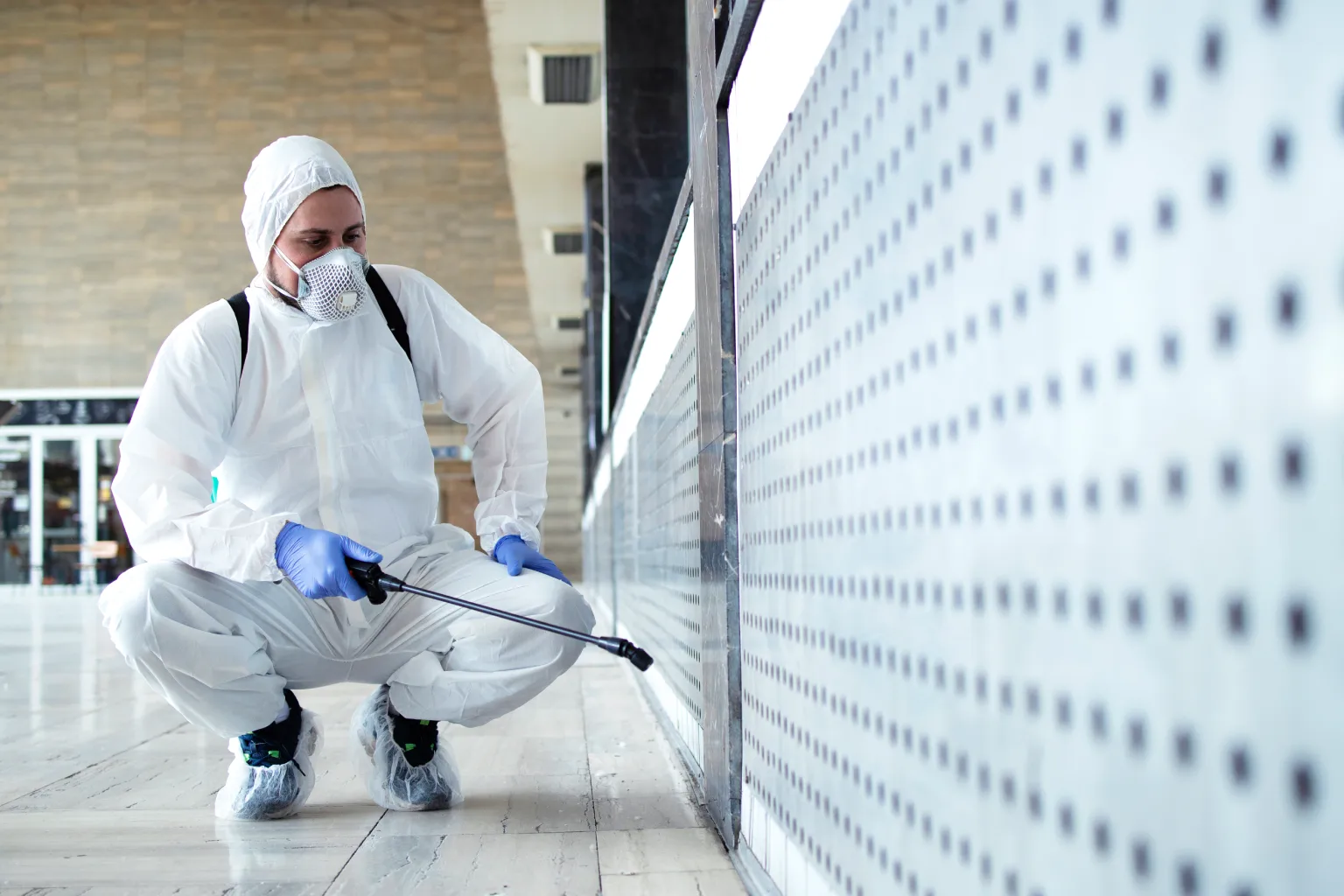
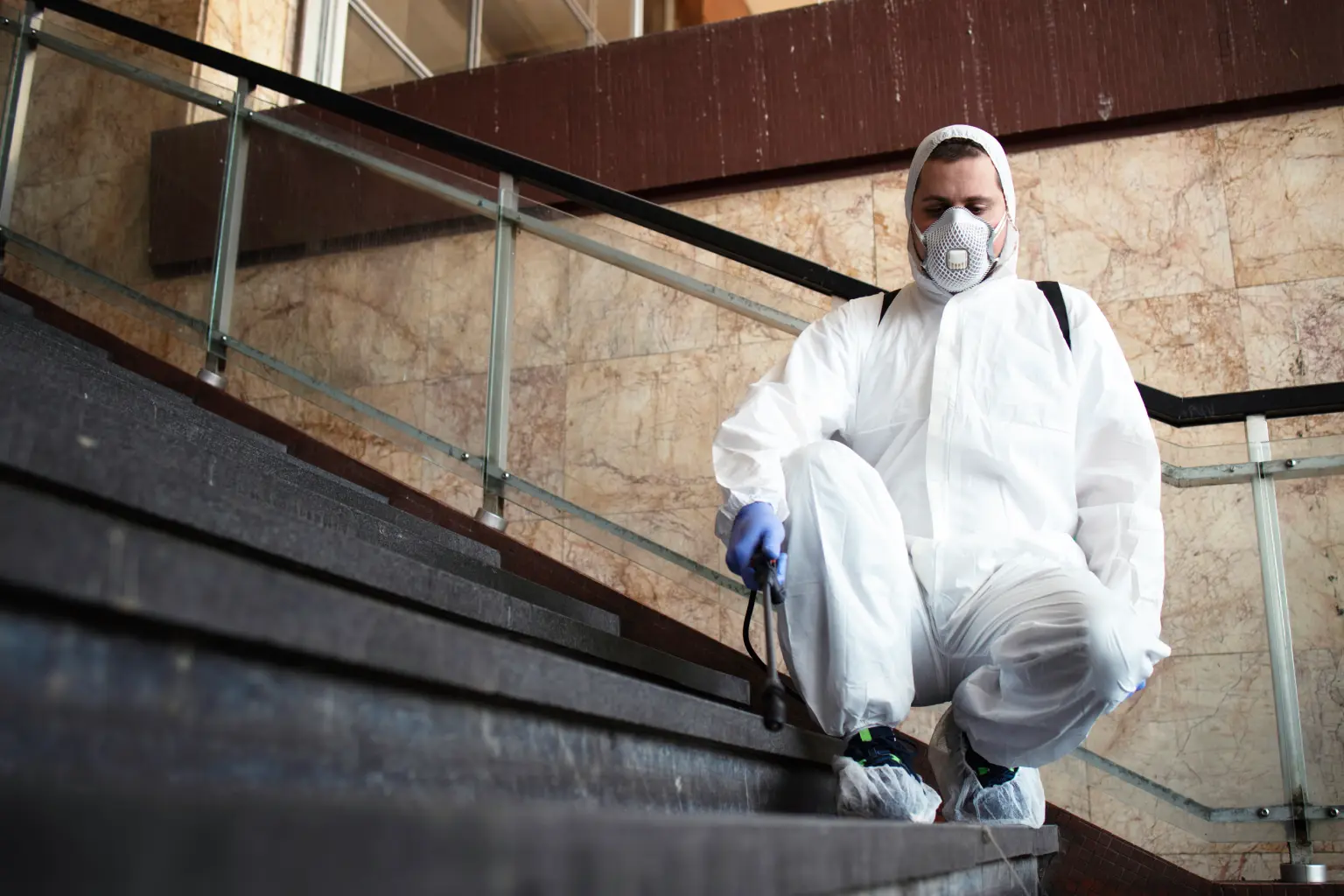
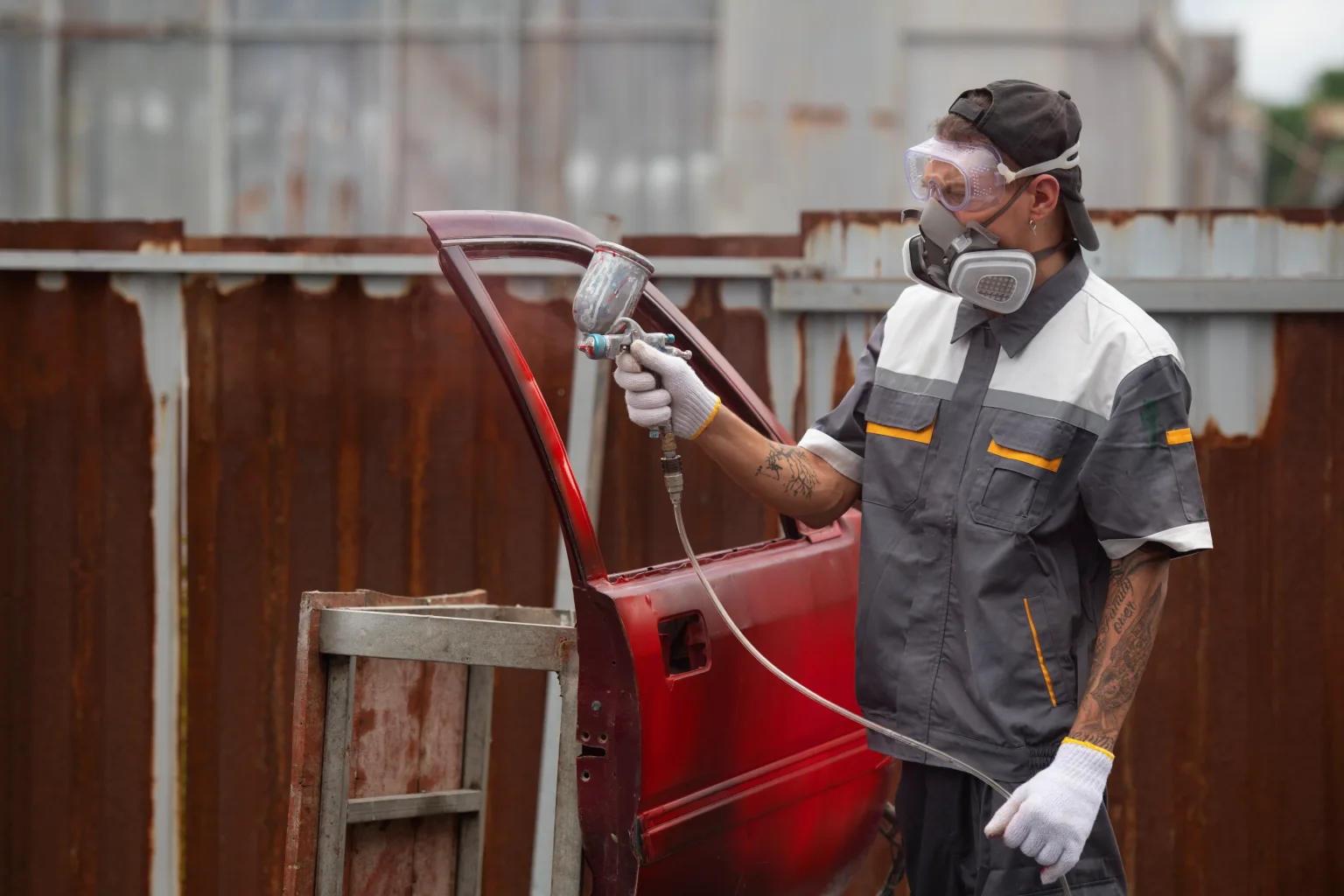
The correct PPE depends on the cleaner, application method, and site conditions. At a minimum, crews may need chemical-resistant gloves, eye protection, protective clothing, and slip-resistant footwear. Respiratory protection may be necessary when product labels require it or when work occurs in enclosed, poorly ventilated, or confined areas.
Pressure washing adds separate hazards. High-pressure streams can cause serious injury, and hoses create trip hazards in active commercial spaces. Electrical equipment and outlets need protection from water exposure. When working near vehicle routes, dock traffic, or public sidewalks, the work zone should be managed as carefully as the cleaning process itself.
Know When Removal Should Become Restoration
Not every graffiti issue should be solved with more chemical or more pressure. If the underlying paint is failing, the wall is heavily weathered, the graffiti is etched into glass, or repeated removal creates visible contrast, restoration may be the appropriate next step.
For example, a painted CMU wall with multiple old tags may look worse after spot treatment if each cleaned area exposes a different shade of the original coating. Repainting the affected elevation can produce a more uniform result and may provide an opportunity to apply a protective coating that simplifies future maintenance.
This is where documentation helps property managers make an informed decision. Before-and-after photos, notes on substrate condition, treatment methods, and recurring locations support better maintenance planning. Recurring graffiti at a specific alley, rear entrance, or loading area may also indicate a need for improved lighting, camera coverage, access control, or faster service response.
Build Graffiti Removal Into Site Maintenance
Fast response can reduce the chance of repeat tagging, but speed should not replace process control. A managed graffiti-removal program allows commercial operators to define response expectations, approval procedures, service hours, documentation standards, and recurring inspection areas across one property or multiple sites.
Einstein Surface & Environmental Services approaches graffiti removal as part of a broader exterior maintenance system. That means matching field execution to the surface, coordinating service around property operations, and maintaining clear work-order accountability for stakeholders who manage high-visibility commercial assets.
The right result is not simply a wall that looks cleaner from ten feet away. It is a restored surface, a protected site, controlled runoff, and a documented service process that keeps a small visual problem from becoming a larger property-management issue.