Industry News & Trends
Insights, updates, and expert advice on commercial pressure washing and surface cleaning.
Add as a preferred source on GoogleTexas Pressure Washing Water Runoff Regulations: A Property Manager's Compliance Guide
August 26, 2026
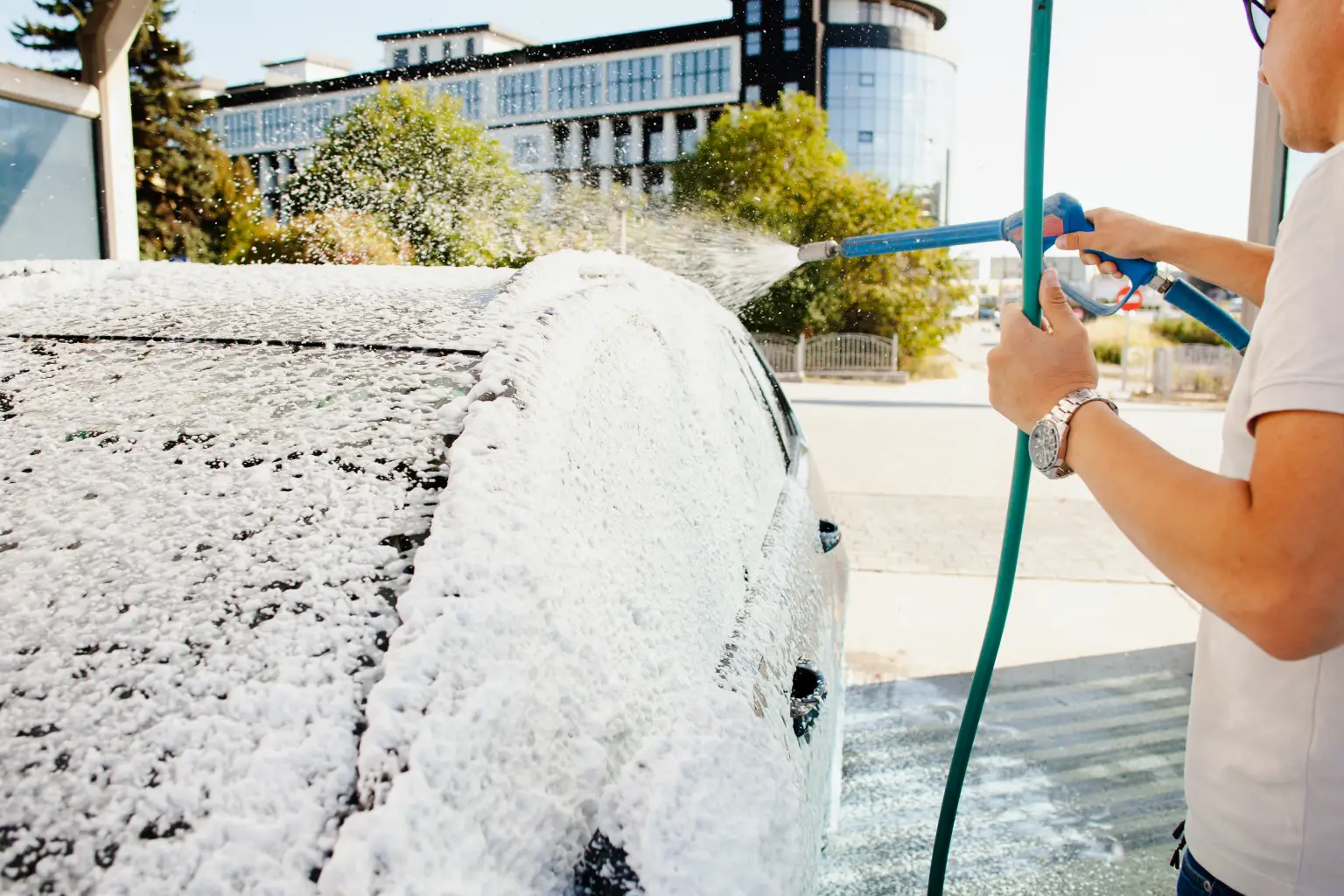
Most commercial property managers schedule exterior cleaning when the property looks dirty. That reactive approach works for aesthetics. It is not how regulators think.
Under Texas and federal law, the moment a pressure washer runs on your commercial property, it generates regulated wastewater. That water carries whatever was on the surface: petroleum compounds, cleaning chemicals, grease, bacteria, and heavy metals from pavement. If that water reaches a storm drain, it has likely violated the Clean Water Act.
Understanding pressure washing water runoff regulations in Texas is not optional knowledge for property managers. It is risk management. This guide breaks down every compliance layer, from federal to municipal, and explains exactly what your cleaning contractor must do to keep you on the right side of the law.
Why Pressure Washing Runoff Is Regulated
The fundamental reason for pressure washing water runoff regulations in Texas is simple: commercial properties generate contaminated wash water that carries pollutants. Those pollutants follow gravity to storm drains, which lead directly to rivers, lakes, and coastal waterways.
Three categories of contamination drive the regulatory concern:
-
Petroleum and hydrocarbon compounds: Found at gas stations, parking lots, loading docks, and any site with vehicle traffic. Toxic to aquatic life at very low concentrations.
-
Chemical cleaning agents: Degreasers, alkaline soaps, and sodium hydroxide-based products are effective cleaners. They are also regulated substances in surface water discharge.
-
Biological and food waste contaminants: Common at restaurant exteriors, dumpster pads, and food distribution facilities. These contribute to elevated bacterial counts in downstream water bodies.
The regulatory framework does not distinguish between intentional discharge and incidental runoff. If contaminated wash water reaches a storm drain during your cleaning operation, the violation is the same regardless of intent.
The Three-Layer Regulatory Framework for Texas Properties
Compliance with pressure washing water runoff regulations in Texas requires understanding three separate regulatory layers. Each layer has its own enforcement authority and penalties.
Layer 1: Federal Clean Water Act and EPA NPDES Program
The foundation of all water runoff regulation in the United States is the federal Clean Water Act. Under this statute, the EPA administers the National Pollutant Discharge Elimination System (NPDES), which prohibits the discharge of pollutants into navigable waters without a permit.
For commercial pressure washing, this translates directly: contaminated wash water is classified as a pollutant discharge. Storm drains in Texas cities empty into waterways covered by the Clean Water Act. Running contaminated wastewater into those drains is a federal violation.
Layer 2: TCEQ State Enforcement
The Texas Commission on Environmental Quality (TCEQ) administers the NPDES framework within Texas under its Texas Pollutant Discharge Elimination System (TPDES). TCEQ enforces stormwater management requirements for commercial and industrial facilities.
Key TCEQ obligations relevant to commercial cleaning include:
-
Industrial facilities with petroleum or chemical exposure must maintain a Spill Prevention, Control, and Countermeasure (SPCC) plan.
-
Multi-sector general permits (TPDES Multi-Sector GP) cover facilities in sectors with significant stormwater contamination risk.
-
TCEQ inspectors can cite property owners for washing-related discharge events documented by neighboring properties or downstream monitoring.
Layer 3: Municipal Stormwater Codes
Texas cities maintain their own stormwater discharge codes that supersede TCEQ and EPA requirements. Local environmental health or public works departments enforce these codes.
| City | Storm Drain Policy for Wash Water | Key Note |
|---|---|---|
| Houston | Rainwater only in storm drains | Trinity Watershed rules apply; violations result in per-day fines |
| San Antonio | Prohibited discharge without a permit | The Edwards Aquifer recharge zone creates stricter local standards |
| Dallas | Rainwater only; contaminated water must be captured | Dallas storm drain network empties to Trinity River tributaries |
| Austin | Barton Springs ordinance adds additional restrictions | Runoff into the Barton Creek watershed carries elevated fines |
| Corpus Christi | Coastal proximity triggers bay protection rules | Wash water with petroleum content requires full capture and disposal |
The critical compliance point: citations for wash water violations in Texas are issued to the property owner, not the cleaning contractor. Your vendor's behavior is your liability.
Which Facility Types Face the Strictest Runoff Rules?
Pressure washing water runoff regulations in Texas apply to all commercial properties, but enforcement intensity scales with contamination risk. These facility types face the most scrutiny:
Gas Stations and Fuel Canopy Areas
Fuel islands are among the highest-risk sites for stormwater violations. Petroleum hydrocarbons from spills, overflow, and vehicle leakage concentrate on the canopy concrete. Standard pressure washing without reclamation pushes these compounds directly toward storm drains.
EPA guidelines specify that facilities with petroleum exposure must use Best Management Practices (BMPs) for wash water management. TCEQ enforces these requirements under the SPCC framework for petroleum storage and handling sites.
Loading Docks and Distribution Centers
Loading docks accumulate hydraulic fluid, diesel residue, and chemical compounds from delivery vehicles. For facilities covered by the TCEQ Multi-Sector GP, cleaning activities that generate runoff must comply with the permit's water quality benchmarks.
Property managers at warehouses and distribution centers should verify that their cleaning contractor provides documentation of water capture and disposal for each service visit.
Restaurant Drive-Thrus and Dumpster Pads
Cooking grease and food waste create high biological oxygen demand (BOD) in runoff. Municipal wastewater authorities in Texas actively sample stormwater near restaurant clusters. Elevated BOD in storm drain outfalls triggers source investigations.
Health department inspections of restaurant exteriors increasingly include dumpster pad and drive-thru area documentation. Uncleaned areas generate both health code and stormwater violation exposure.
What Compliance-Grade Washing Actually Looks Like
Understanding pressure washing water runoff regulations in Texas helps you evaluate your cleaning vendor accurately. Compliant commercial washing has specific, observable characteristics.
Water Reclamation Equipment On-Site
Compliant contractors deploy water capture berms, vacuum recovery systems, or enclosed surface cleaning heads that collect wastewater at the point of generation. The water is then filtered and disposed of through approved channels: municipal sanitary sewer systems or licensed disposal facilities.
Pre-Job Site Assessment
A compliant contractor evaluates storm drain locations before washing begins. Drain covers are blocked, or reclamation berms are positioned before any water is applied to the surface. This step is not optional on regulated sites.
Chemical Selection and Documentation
Only approved detergents and cleaning agents are used. Highly caustic or phosphate-based chemicals are restricted by both EPA guidelines and TCEQ rules. Compliant contractors maintain Safety Data Sheets (SDS) for every chemical used on-site.
Post-Service Documentation
For facilities subject to TCEQ permits or SPCC plans, documentation of each cleaning event is part of the compliance record. This includes the date of service, surfaces cleaned, chemicals used, wastewater disposal method, and the volume of water captured.
Penalties for Non-Compliance: What Property Managers Risk
Violations of pressure washing water runoff regulations in Texas carry significant financial and operational penalties.
| Violation Type | Enforcement Body | Penalty Range |
|---|---|---|
| Unpermitted stormwater discharge | EPA / TCEQ | Up to $25,000 per day per violation |
| Petroleum runoff into the storm drain | TCEQ / City code enforcement | $10,000–$50,000 per incident |
| Failure to maintain SPCC plan (industrial) | EPA | Up to $37,500 per day |
| Municipal stormwater code violation | City environmental enforcement | $500–$10,000 per incident, depending on the city |
| Repeat violations within 12 months | TCEQ / EPA | Escalated fines and potential operational orders |
These penalties apply to the property owner. Contractors who generate the violation may face their own licensing consequences, but the property owner bears primary liability for what happens on their site.
How to Verify Your Contractor Is Compliant
Property managers managing single or multi-site portfolios should verify the following before signing any commercial cleaning contract:
-
Water reclamation capability: Does the contractor own and deploy vacuum recovery systems or enclosed cleaning heads? Ask to see the equipment.
-
Chemical documentation: Can they produce SDS sheets for every chemical they apply? Are the chemicals on the EPA-approved list for regulated sites?
-
SPCC and TPDES knowledge: Does the contractor understand your facility's permit obligations? Can they provide documentation that aligns with your TCEQ Multi-Sector GP?
-
Post-service records: Will they provide written documentation of wastewater disposal after each visit? This is your compliance record in any enforcement audit.
-
Liability insurance: Verify that the contractor carries environmental liability coverage. If a violation occurs from their operation, insurance determines who absorbs the cost.
Einstein Surface: Full EPA and TCEQ Compliance Documentation
Einstein Surface & Environmental Services operates with water reclamation equipment on all regulated commercial sites across Texas. We deploy capture berms, vacuum recovery, and filtration systems, then document wastewater disposal for your compliance records.
Our service covers gas stations, loading docks, drive-thrus, dumpster pads, and multi-site portfolios under a single contractor relationship. Compliant washing, overnight scheduling, and documentation on every visit.
Request a compliant pressure washing quote today.
Einstein Surface Keeps Your Texas Property Compliant and Clean
Navigating pressure washing water runoff regulations in Texas is not complex if you understand the framework. Federal Clean Water Act at the top, TCEQ enforcement in the middle, and municipal codes at the property level. Each layer adds requirements. Ignoring any one of them creates a violation exposure.
The contractor you choose determines your compliance position. Water reclamation equipment, chemical documentation, and post-service records are not premium features. They are the baseline standard for legal commercial washing on regulated Texas sites.
Einstein Surface brings industrial-grade pressure washing, water runoff regulations, and Texas compliance to every job. Full reclamation, documented disposal, and certified technicians across all Texas markets.
Protect your facility from runoff violations. Get a compliant pressure washing quote today.
Frequently Asked Questions
1. Does every commercial property need water reclamation during pressure washing?
Sites with petroleum, grease, or chemical contamination are required to use reclamation. General commercial properties without regulated contaminants have more flexibility, but best practice recommends reclamation regardless.
2. What is the TCEQ's role in Texas pressure washing runoff enforcement?
TCEQ administers Texas stormwater permits under TPDES, which implements the federal NPDES program. They inspect commercial facilities and enforce discharge regulations for contaminated wastewater.
3. What are the fines for allowing pressure wash runoff into Texas storm drains?
Federal fines under the Clean Water Act can reach $25,000 per day per violation. TCEQ penalties for petroleum discharge range from $10,000 to $50,000 per incident, depending on severity and recurrence.
4. How does Einstein Surface document compliance for property managers?
Einstein Surface provides post-service records for each visit, including surfaces cleaned, chemicals used, wastewater capture volume, and disposal confirmation. This documentation supports TCEQ and SPCC audit requirements.
Need fast commercial graffiti removal in Texas?
Contact Einstein Surface today for quick, professional service.