















A loading dock tells you a lot about how a facility is actually being run. You can have a clean lobby, organized signage, and a polished front entrance, but if the dock is coated in grease, tracked with pallet debris, and holding standing water near receiving lanes, the operational risk is still there. That is why loading dock cleaning services matter for more than appearance. They support safety, sanitation, workflow, and the condition of the concrete itself.
For commercial and industrial properties, the loading dock is one of the most abused exterior surfaces on site. It handles constant tire traffic, foot traffic, spills, leaks, packaging waste, and exposure to weather. In many facilities, it also serves as a transition point between exterior contamination and interior operations. When cleaning is inconsistent, the dock starts creating problems that extend well beyond the slab.
What loading dock cleaning services are actually solving
The most obvious issue is buildup. Oil drips from trailers, hydraulic fluid leaks from equipment, food residue accumulates in distribution environments, and general dirt gets packed into the surface over time. Add broken pallet fragments, shrink wrap scraps, and drain-area debris, and the dock becomes harder to manage safely.
But the bigger concern is usually risk concentration. Loading docks are already high-activity zones with forklifts, delivery schedules, pedestrians, and time pressure. When the surface is dirty, traction declines. When drains are blocked, water pools. When organic residue sits too long, odors and sanitation issues follow. A neglected dock can quickly become a maintenance problem, a safety concern, and a visible sign of operational drift.
This is where precision-focused cleaning has real value. The goal is not just to wash the area and move on. The goal is to remove contaminants that affect performance, reduce the likelihood of slips and tracking, and restore a more controllable operating environment.
Why loading dock cleaning services need a commercial process
A loading dock is not the same as a storefront sidewalk. The surface conditions are heavier, the contaminants are more stubborn, and the cleaning plan has to account for traffic patterns, drainage, and operational timing.
A proper service approach starts with site conditions. Some docks mainly deal with dirt, tire marks, and general staining. Others have persistent grease, food-related residue, dumpster proximity, or heavy-volume trailer movement. The cleaning method has to match the actual contamination. Too light of an approach wastes the visit. Too aggressive of an approach can damage surrounding areas, disrupt schedules, or push wastewater into the wrong places.
Commercial clients also need service continuity. If a property manager oversees multiple locations or a facility team is managing a tight receiving schedule, the cleaning vendor cannot operate like a one-off contractor. They need organized scheduling, defined work scopes, documented service, and a system that supports repeatable results.
That operating discipline is often what separates a managed service provider from a basic pressure washing company. For loading docks, that difference matters.
Common conditions found at commercial loading docks
Most loading dock cleaning projects involve a mix of surface contamination rather than one isolated problem. Oil staining is common, especially around trailer parking positions and equipment paths. Gum, labels, cardboard residue, and pallet debris often collect near doors and staging areas. In food service and grocery environments, organic spills can create both odor and sanitation pressure.
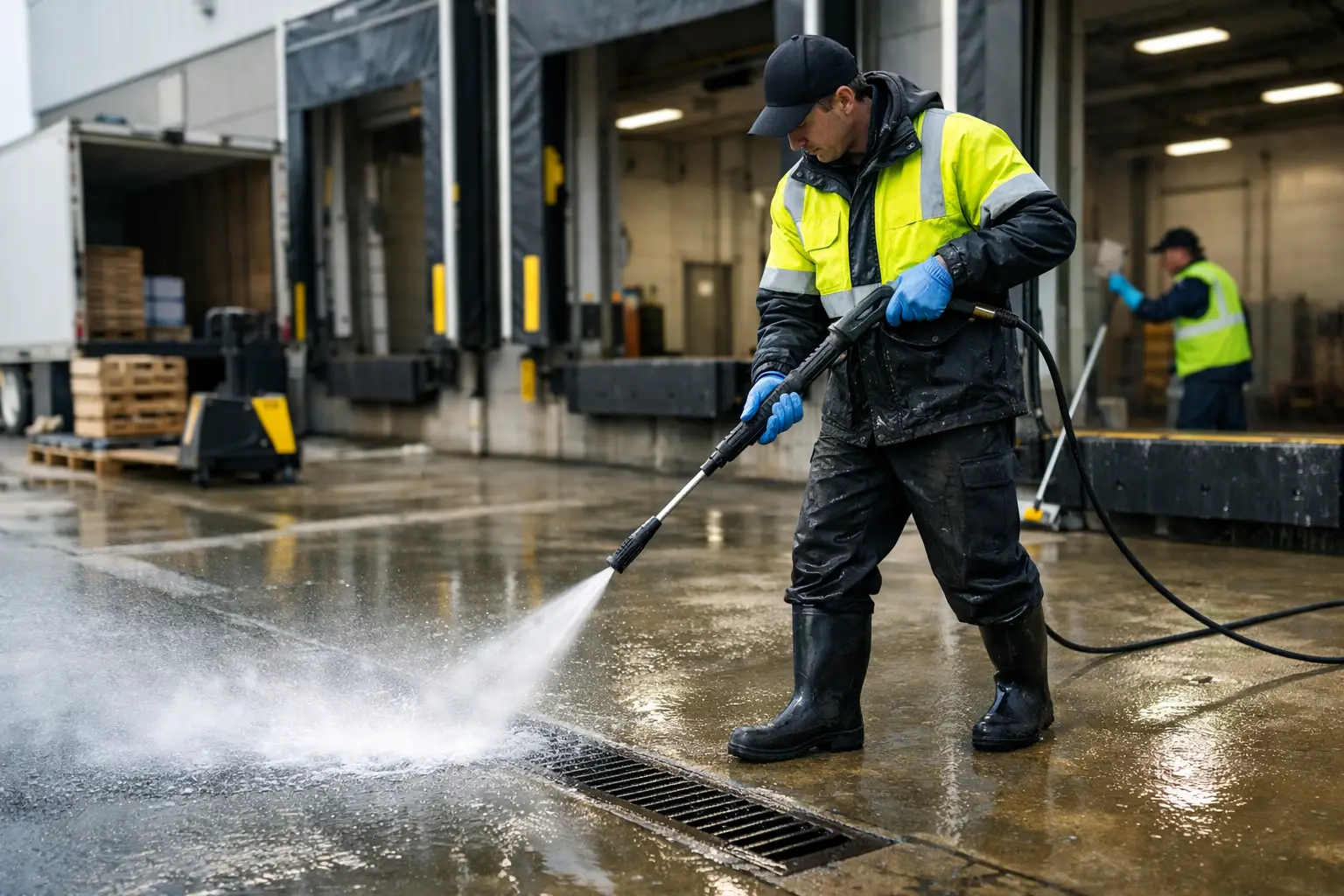
Drain zones are another frequent issue. Dirt, leaves, trash fragments, and washdown residue can collect in low spots and around grates. Once drainage slows, water starts sitting where people walk and equipment turns. That creates a hazard quickly, especially in early morning operations or during heavy delivery periods.
There is also the appearance factor, which should not be dismissed. For retail, distribution, logistics, and mixed-use commercial assets, the back-of-house area still affects inspections, tenant perception, employee experience, and brand standards. A dirty dock signals deferred maintenance, even when the rest of the property is being managed well.
The operational value of routine dock cleaning
Routine service usually performs better than reactive cleaning. Once a dock reaches the point of thick buildup, embedded staining, or persistent odor, restoration becomes more intensive and more disruptive. Regular maintenance keeps contamination from hardening into the surface and makes the area easier to manage over time.
That matters for budgeting as much as it does for cleaning performance. A dock that is serviced on a structured schedule typically requires less corrective effort per visit than one that is ignored until someone complains or an inspection is approaching. It also gives facility teams more predictability. They know when service is happening, what areas are included, and how to coordinate around the work.
There is a trade-off, of course. Not every property needs the same frequency. A high-volume grocery receiver may need a much tighter service cycle than a lower-traffic industrial warehouse. The right schedule depends on traffic, spill exposure, nearby waste areas, and how visible the dock is to staff, tenants, or customers. The point is not to overservice. It is to match the cleaning interval to the actual operating conditions.
What to expect from a professional cleaning scope
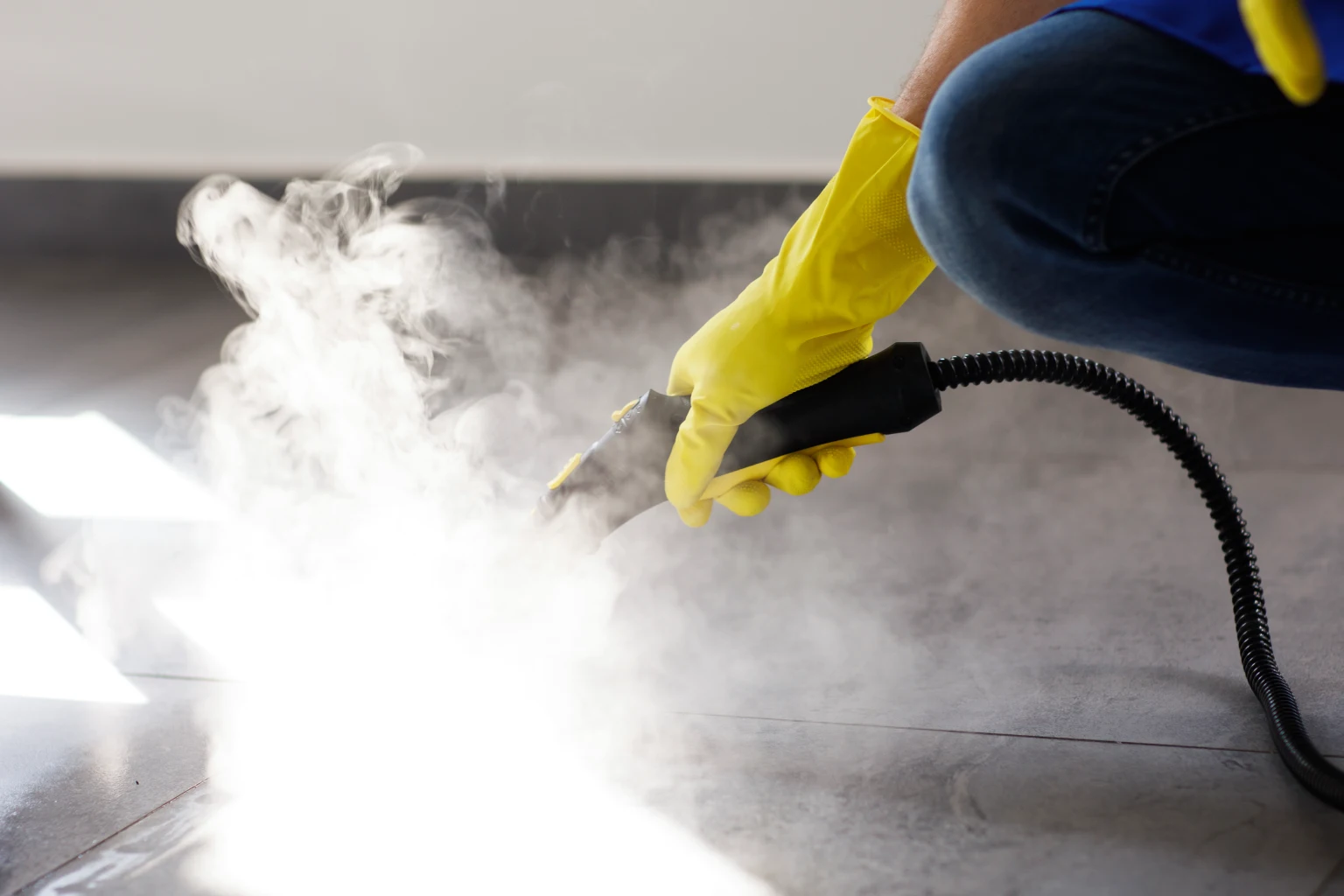
Effective loading dock cleaning services usually involve more than surface rinsing. The scope often includes pressure washing targeted to heavy-use concrete, removal of grime and traffic film, treatment of oil and grease-prone areas, and cleaning around dock doors, approach lanes, and staging zones. In some cases, adjacent dumpster pads or service corridors need to be addressed at the same time because contamination travels between these areas.
Execution should also account for runoff control and site logistics. On active commercial properties, cleaning crews need to work with the site, not against it. That means identifying service windows that minimize disruption, handling equipment placement carefully, and paying attention to drainage behavior during the cleaning process.
Documentation is another practical advantage. Commercial stakeholders often need confirmation that work was completed, especially for multi-site portfolios or third-party managed properties. Clear work orders, scheduling communication, and service records support accountability. For many clients, that administrative consistency is as important as the field work itself.
Choosing a provider for loading dock cleaning services
If you are evaluating vendors, look beyond price and ask how the work will actually be managed. A loading dock can be cleaned poorly with professional-looking equipment just as easily as it can be cleaned well. The difference comes down to process.
A qualified provider should understand commercial concrete conditions, common dock contaminants, traffic-sensitive scheduling, and the operational constraints of active facilities. They should be able to define what is included, identify likely problem areas before service starts, and explain whether the site is a fit for one-time restoration, ongoing maintenance, or a combination of both.
It is also worth asking how they handle communication. For a commercial account, responsiveness, scheduling accuracy, and documentation are not extras. They are part of the service. Einstein Surface & Environmental Services, for example, is structured around managed delivery, with scheduling, work orders, and client-facing systems that support more controlled execution across commercial properties.
That kind of structure becomes more valuable as complexity increases. A single dock at a small site may be straightforward. A portfolio of retail back-of-house service areas across multiple Texas markets is not.
When dock cleaning becomes urgent
Some signs indicate that service should move up the priority list. If employees are walking around slick zones or pooled water, the issue is already affecting safety. If odors are noticeable near receiving, buildup has likely gone beyond normal surface dirt. If stains have spread into turning areas, dock thresholds, or nearby service lanes, the contamination is becoming harder to contain.
You may also see indirect signs. Interior floors start getting dirtier near receiving doors. Tenants complain about back-of-house conditions. Site teams begin doing temporary cleanup that never fully resolves the problem. These are all signs that the dock needs a more defined maintenance plan rather than occasional attention.
The best time to address the dock is usually before conditions force an urgent response. Once contamination is established, cleanup becomes less efficient and more expensive.
A cleaner dock supports a better-run property
Commercial exterior maintenance is often judged by what visitors see first, but operations are judged by what happens where the public rarely looks. The loading dock is one of those areas. When it is clean, drains are functioning, contamination is controlled, and the concrete is being maintained on schedule, the whole property runs with less friction.
That is the practical value of professional loading dock cleaning services. They help protect surfaces, reduce avoidable hazards, and support a facility standard that is easier to sustain. If the dock is carrying daily operational pressure, its cleaning program should be built with the same level of discipline.