
A polished lobby floor can still fail inspection if the warehouse corridor behind it is holding oil shadows, tire marks, and embedded dust. That is the reality behind indoor concrete cleaning services in commercial and industrial properties. Interior concrete takes constant abuse from foot traffic, carts, pallet jacks, forklifts, leaks, spills, and daily operations, and once contamination settles into the surface, routine janitorial work usually is not enough.
For facility managers and property operators, the issue is not only appearance. Dirty interior concrete affects traction, indoor air quality, housekeeping efficiency, and the overall standard of a site. In customer-facing spaces, stained floors communicate neglect. In service areas, they can complicate safety protocols and create avoidable maintenance problems. The right cleaning program treats indoor concrete as an operational surface, not just a cosmetic one.
What indoor concrete cleaning services actually cover
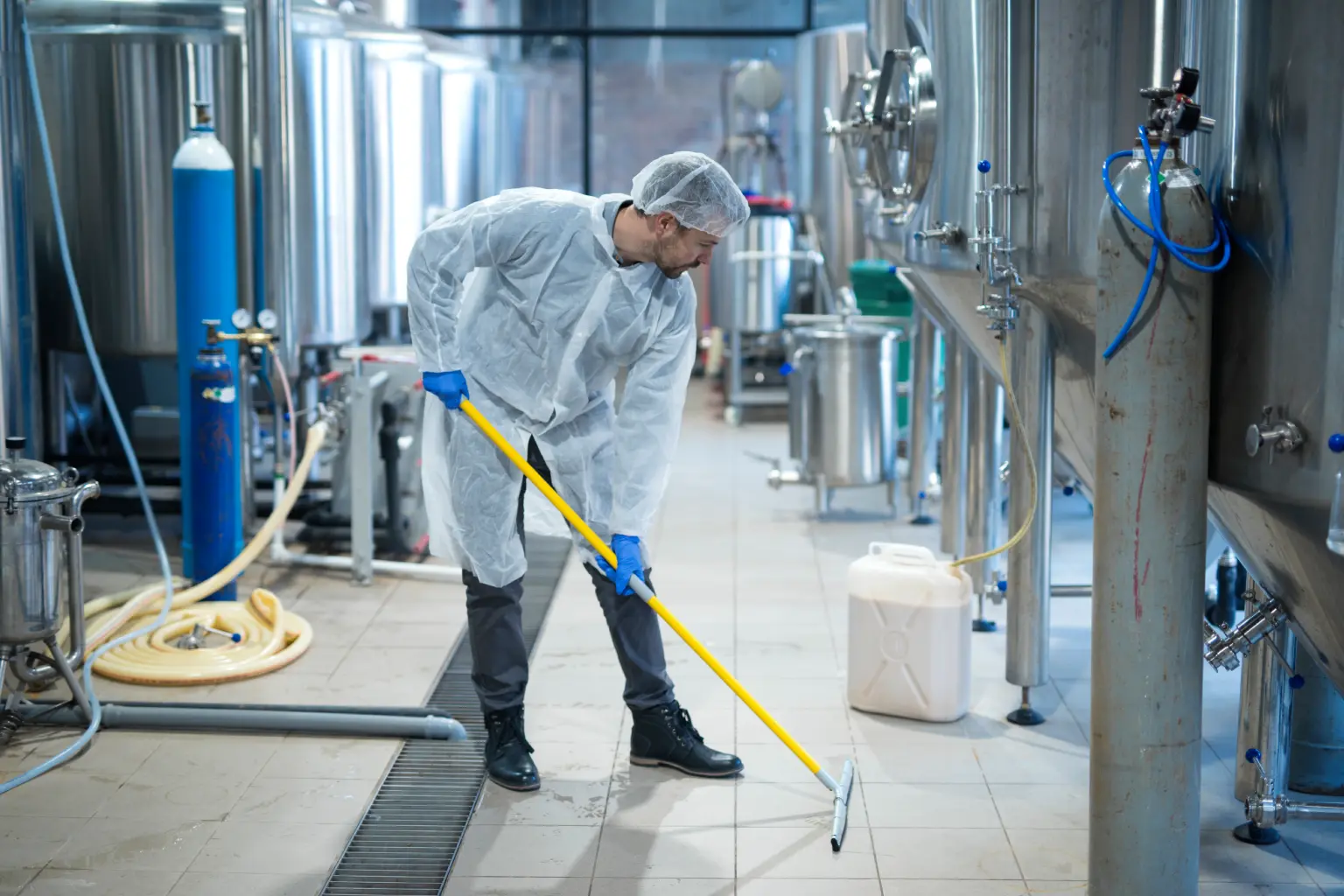
Indoor concrete cleaning services are designed for hard-use interior surfaces that need more than mopping or light machine scrubbing. That can include warehouse floors, loading interiors, service corridors, retail back-of-house areas, utility rooms, stairwells, maintenance zones, parking structures, and industrial workspaces. In some properties, it also applies to polished or sealed concrete in public-facing areas where the finish needs to be protected while contamination is removed.
The work itself depends on the condition of the floor and the type of buildup. Dust and dry particulate behave differently than grease. Tire residue requires a different approach than rust transfer or beverage spills. In older facilities, multiple layers of staining may be present, including contaminants that have migrated deep into porous concrete. A precision-focused cleaning process starts by identifying what is on the surface, how long it has been there, and whether the floor has been sealed, densified, coated, or left untreated.
That assessment matters because aggressive cleaning can do damage if it is applied without control. Interior concrete is durable, but not every surface can handle the same chemistry, pressure level, dwell time, or mechanical action. In commercial environments, cleaning has to solve the problem without disrupting adjacent operations or degrading the floor system.
Why indoor concrete cleaning matters beyond appearance
A cleaner floor changes how a facility performs. In industrial and commercial settings, concrete contamination often builds gradually enough that teams stop noticing it. Then a safety walk, tenant tour, customer visit, or audit makes the problem visible all at once.
The first concern is traction. While cleaning alone does not fix every slip risk, removing oils, fine dust, food residue, and tracked-in grime can improve surface conditions significantly. That is especially relevant in entrances, break areas, receiving zones, and production support spaces where moisture or residue is part of normal operations.
The second concern is maintenance efficiency. When concrete is heavily soiled, every other housekeeping task gets harder. Dust reappears faster. Spill response becomes less effective because the floor is already loaded with residue. Scrubbers lose efficiency, and custodial labor starts going toward managing symptoms rather than restoring surface condition.
There is also the issue of asset presentation. A facility can have strong operations and still look poorly managed if interior concrete is discolored, streaked, or permanently darkened around traffic lanes. For retail operators, that affects customer impression. For industrial users, it influences how clients, inspectors, and internal stakeholders evaluate site discipline. Clean surfaces signal control.
Common indoor concrete problems in commercial properties
Most interior concrete cleaning requests start with a visible trigger. It may be forklift tire marking in a warehouse, dark staining around trash movement paths, oil transfer in a maintenance bay, or fine dust accumulation that keeps migrating into occupied areas. Those symptoms often point to broader wear patterns.
In high-traffic facilities, rubber transfer and embedded grime are common. In food-adjacent or retail environments, spills and sticky residue can bond with dust and create dull, dirty traffic zones. In industrial properties, oil spotting, hydraulic fluid, grease, metal dust, and chemical residue can build over time. Parking structures and covered interior ramps often present a separate challenge because they collect a mix of vehicle residue, water intrusion, and heavy particulate.
Older concrete also tends to hold contamination more aggressively. Once pores are open and the surface has worn, stains penetrate deeper and standard cleaning becomes less effective. That does not always mean replacement or resurfacing is needed, but it does mean the cleaning method must be more deliberate.
Indoor concrete cleaning services and the process behind results
The difference between basic floor cleaning and commercial indoor concrete cleaning services is process control. In a professional setting, results depend on matching the cleaning method to the surface condition while managing water, chemistry, equipment, and job sequencing.
A disciplined process often starts with a site review. The goal is to identify traffic patterns, contamination types, drainage limitations, access constraints, and any operational sensitivities. Some facilities can be cleaned during off-hours with minimal interruption. Others require zone-by-zone scheduling to maintain production flow or tenant access.
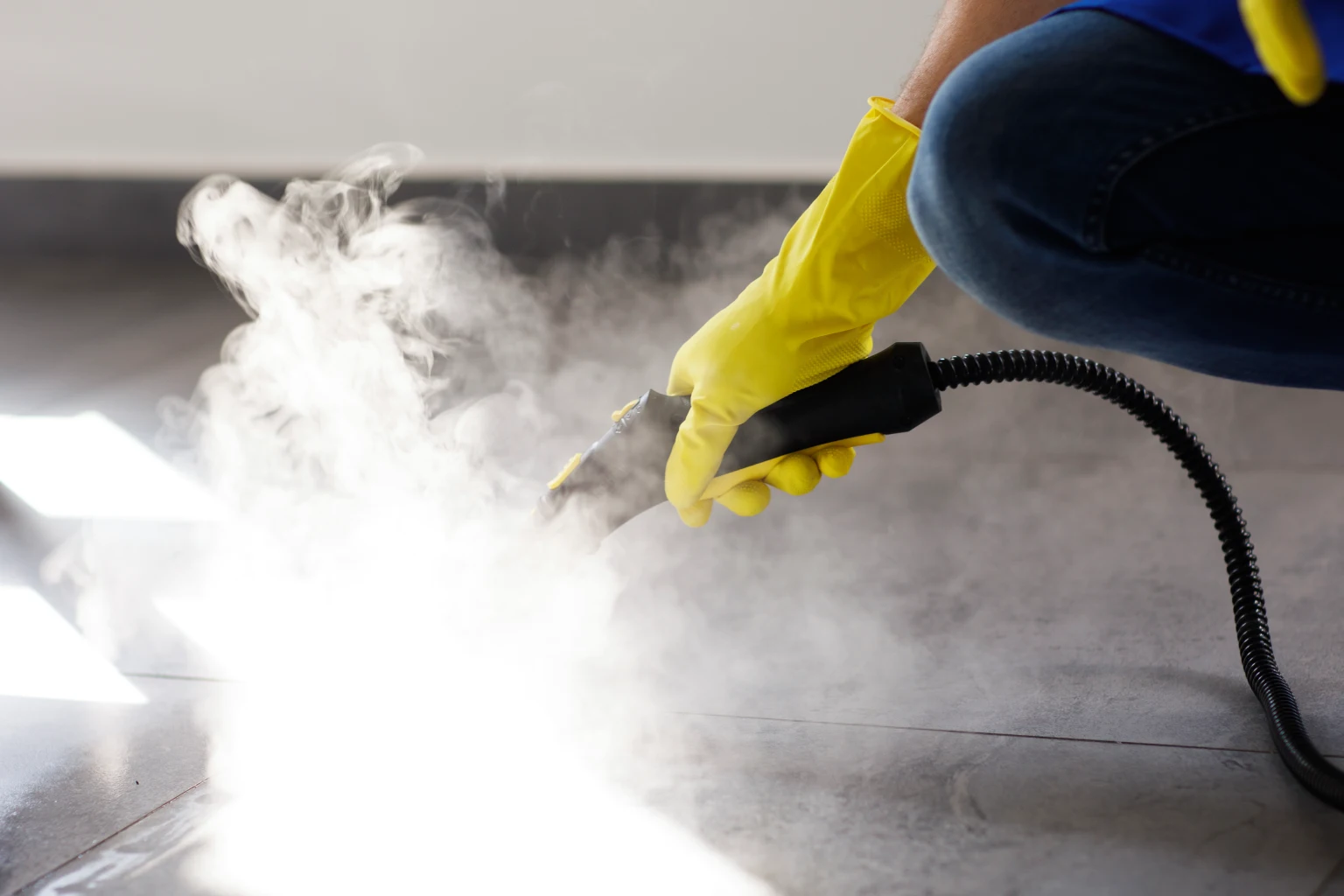
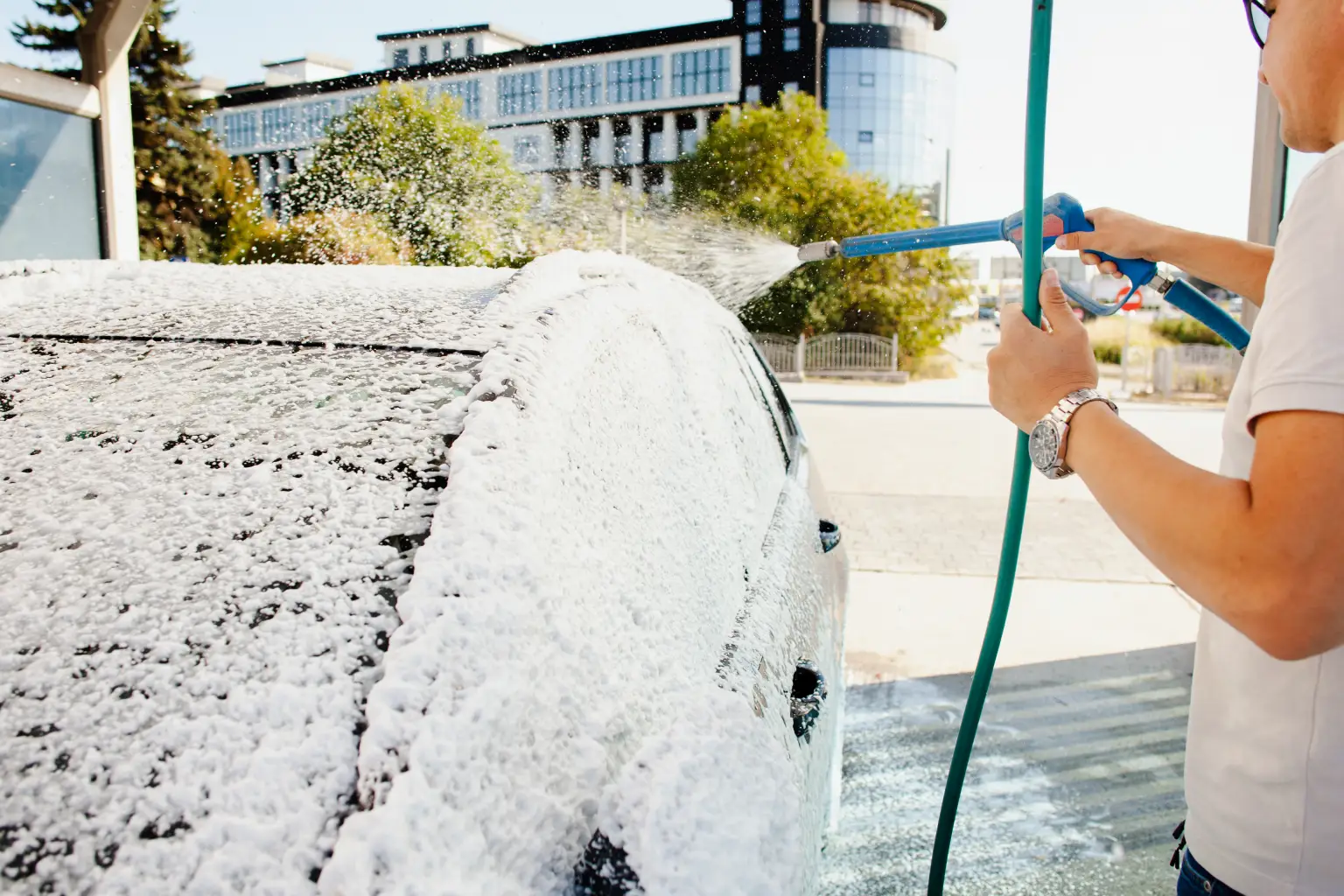
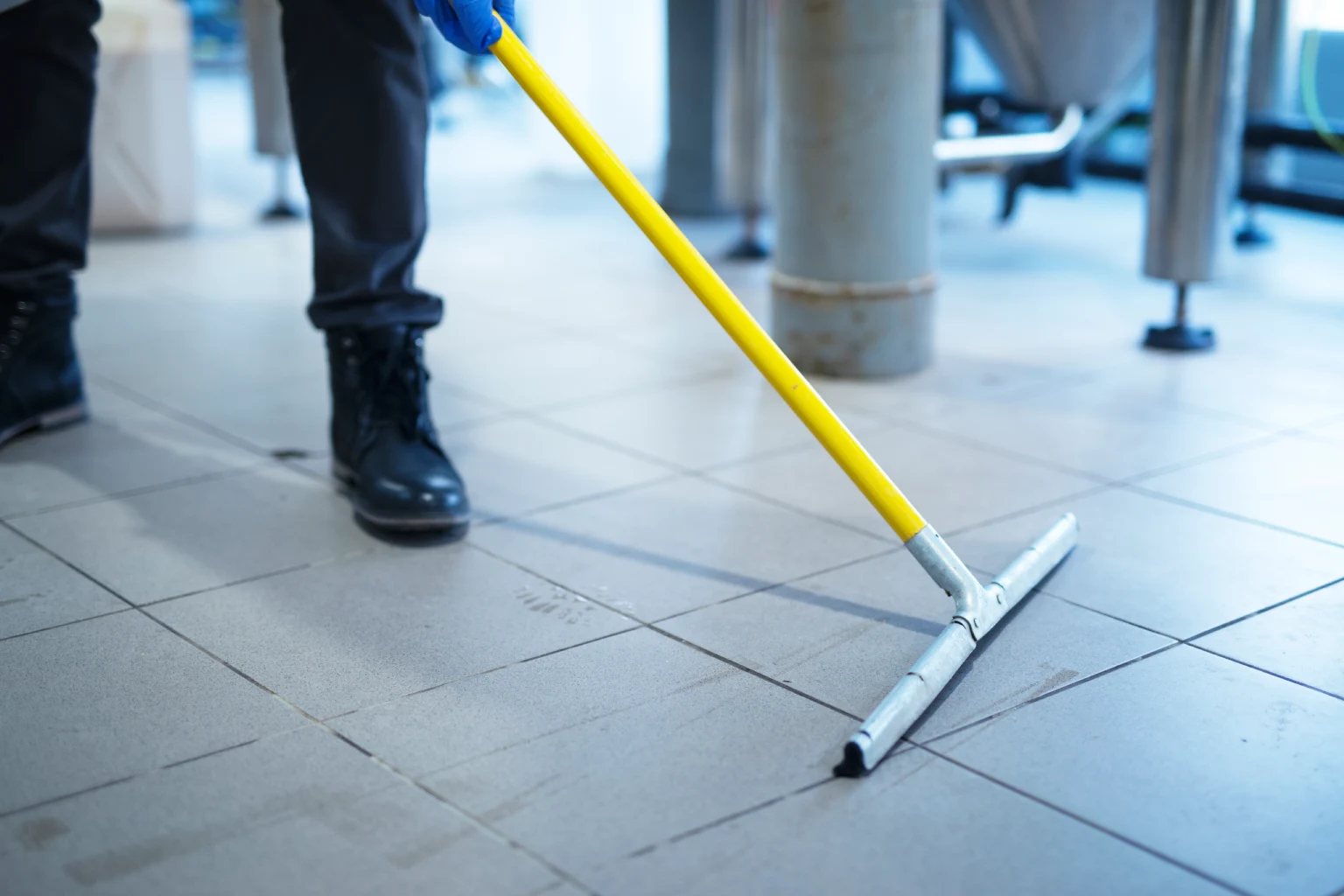
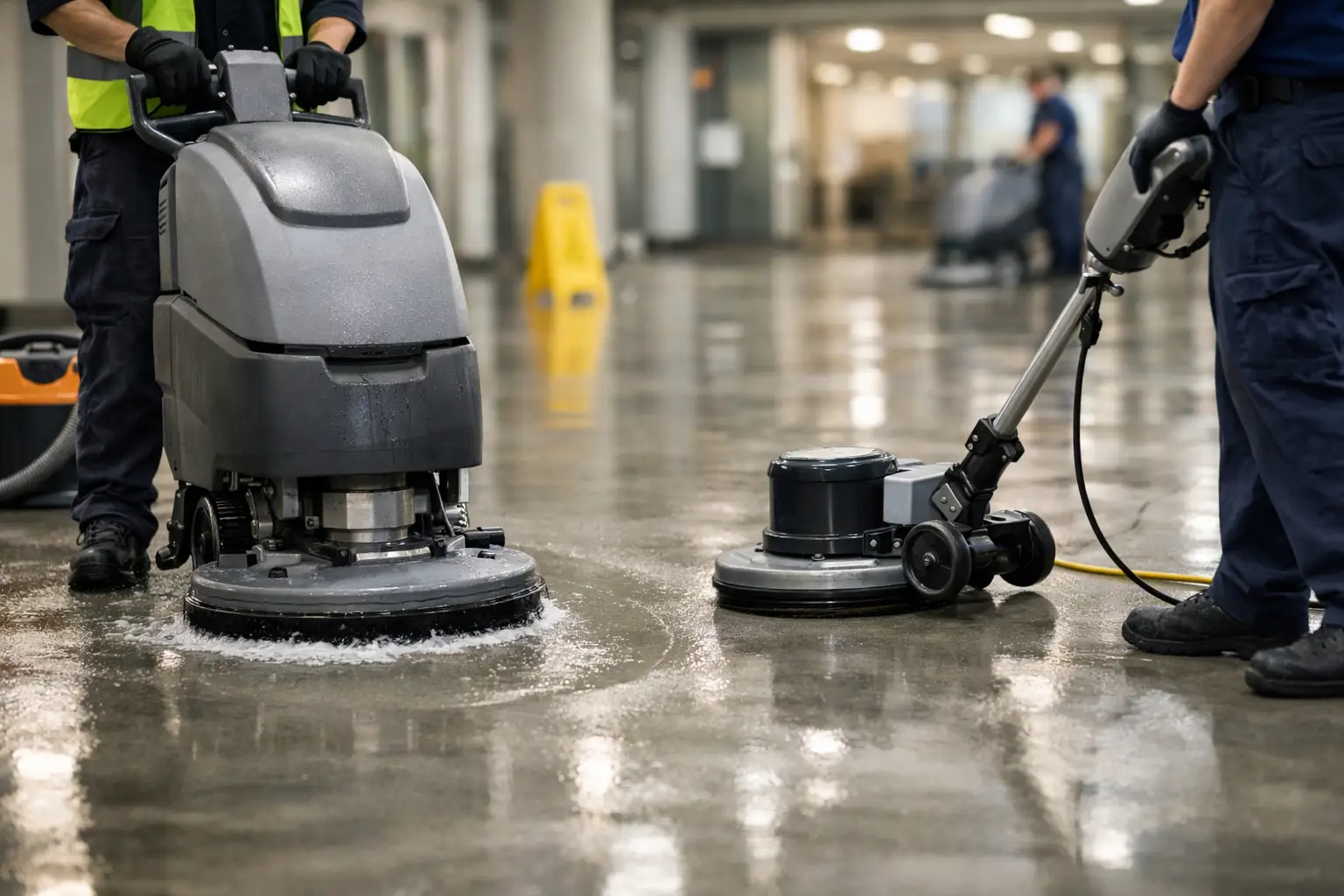
Pre-treatment is usually the step that determines whether the work produces a noticeable improvement or just moves soil around. Degreasers, specialty cleaners, or low-foam detergents may be used based on the residue involved. Mechanical agitation, surface cleaners, auto-scrubbing equipment, or controlled pressure washing methods can then be applied as appropriate for the indoor environment.
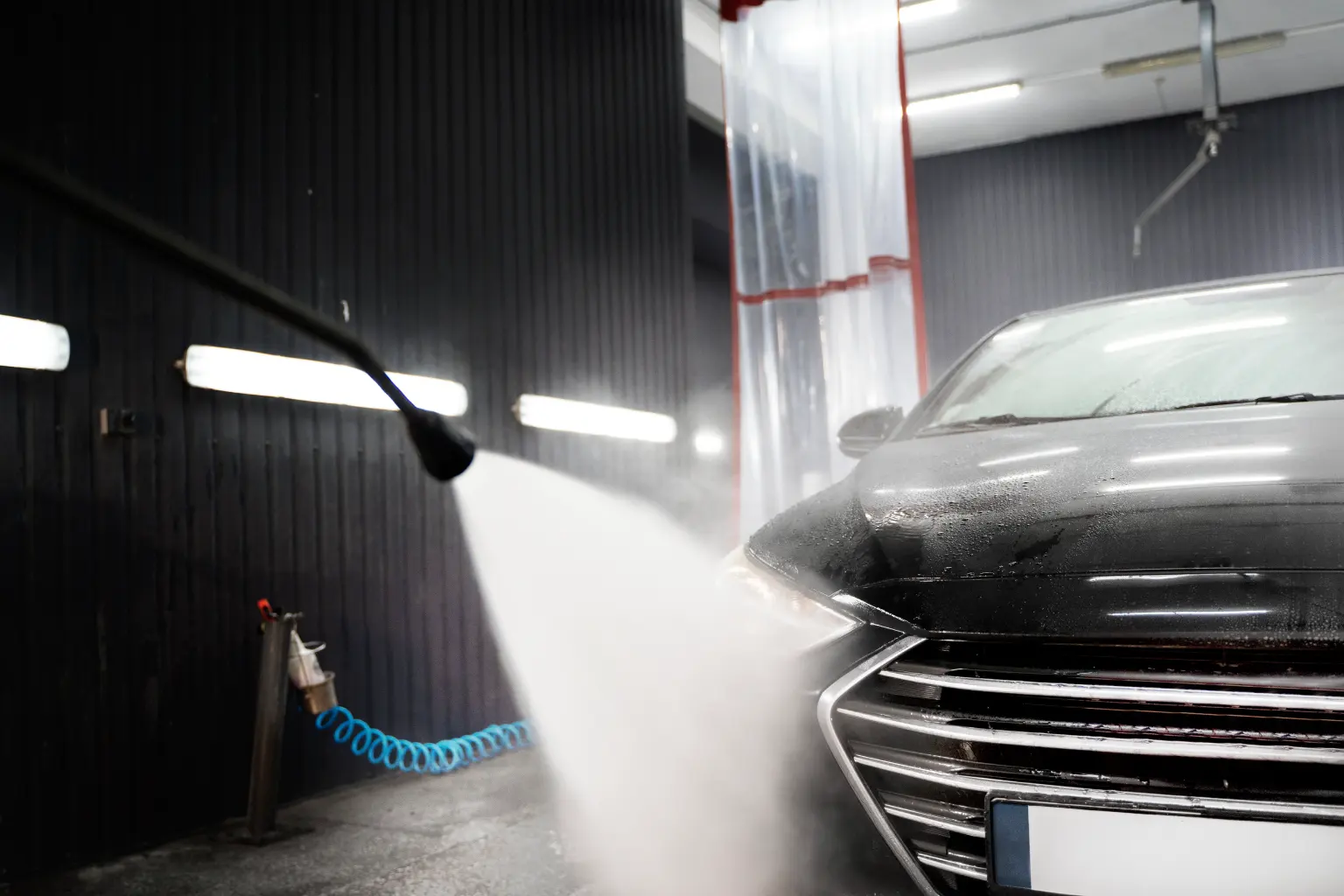
Water management is one of the biggest operational differences indoors. Exterior washing gives runoff more room to disperse and be recovered strategically. Interior cleaning has tighter controls. Recovery systems, containment methods, and careful sequencing matter because standing water, overspray, and uncontrolled runoff can create hazards or interfere with nearby operations. In many facilities, that logistical piece is just as important as the cleaning itself.
After cleaning, the floor condition should be evaluated honestly. Some staining will lift fully. Some will improve but remain visible due to age, porosity, or chemical change within the concrete. That distinction matters because commercial clients need accurate expectations, not inflated promises.
When recurring service makes more sense than one-time cleaning
For many properties, indoor concrete cleaning is not a one-time correction. It is part of a managed maintenance program. That is especially true in facilities with constant cart traffic, service operations, product movement, or public-facing concrete floors that need to stay presentable.
Recurring service reduces the cost and disruption of major restoration work. Once a floor reaches heavy saturation, cleaning takes longer, often requires stronger chemistry, and may still leave behind permanent visual damage. A scheduled program keeps contamination from reaching that point. It also creates consistency across multiple locations, which matters for regional operators trying to maintain the same standard from site to site.
This is where service management matters as much as field execution. Scheduling, site documentation, work orders, and communication protocols are not administrative extras. They are part of what makes a maintenance vendor usable at scale. A property manager with several facilities does not need a cleaner who simply shows up and washes floors. They need a service partner who can coordinate around operating hours, confirm scope, document completion, and maintain accountability over time.
That is the value of a structured commercial model. Companies such as Einstein Surface & Environmental Services are built around that level of precision, where industrial-grade cleaning is supported by organized scheduling, reporting, and repeatable service delivery.
How to evaluate indoor concrete cleaning services
If you are sourcing indoor concrete cleaning services, the lowest quote is rarely the clearest indicator of value. A better filter is whether the provider understands interior constraints. Indoor concrete cleaning involves more risk than open-area exterior work because access is tighter, water has to be controlled, and surrounding operations are usually active or sensitive.
Ask how the floor will be assessed, what recovery methods will be used, and how the provider handles stained areas that may not fully restore. It is also worth clarifying whether the service is designed for one-time correction, periodic maintenance, or integration with broader surface care across the property.
For multi-site operators, consistency should be part of the conversation early. It is one thing to clean a single floor well. It is another to deliver the same standard across a portfolio with coordinated communication and predictable execution. If your buildings operate on schedules, tenants, audits, or brand standards, that distinction becomes critical.
Indoor concrete does not need attention because it is fragile. It needs attention because it is constantly asked to perform. When it is cleaned with the same level of discipline as the rest of the operation, the result is not just a better-looking floor. It is a cleaner, safer, more controlled environment that supports the way the property is supposed to run.