





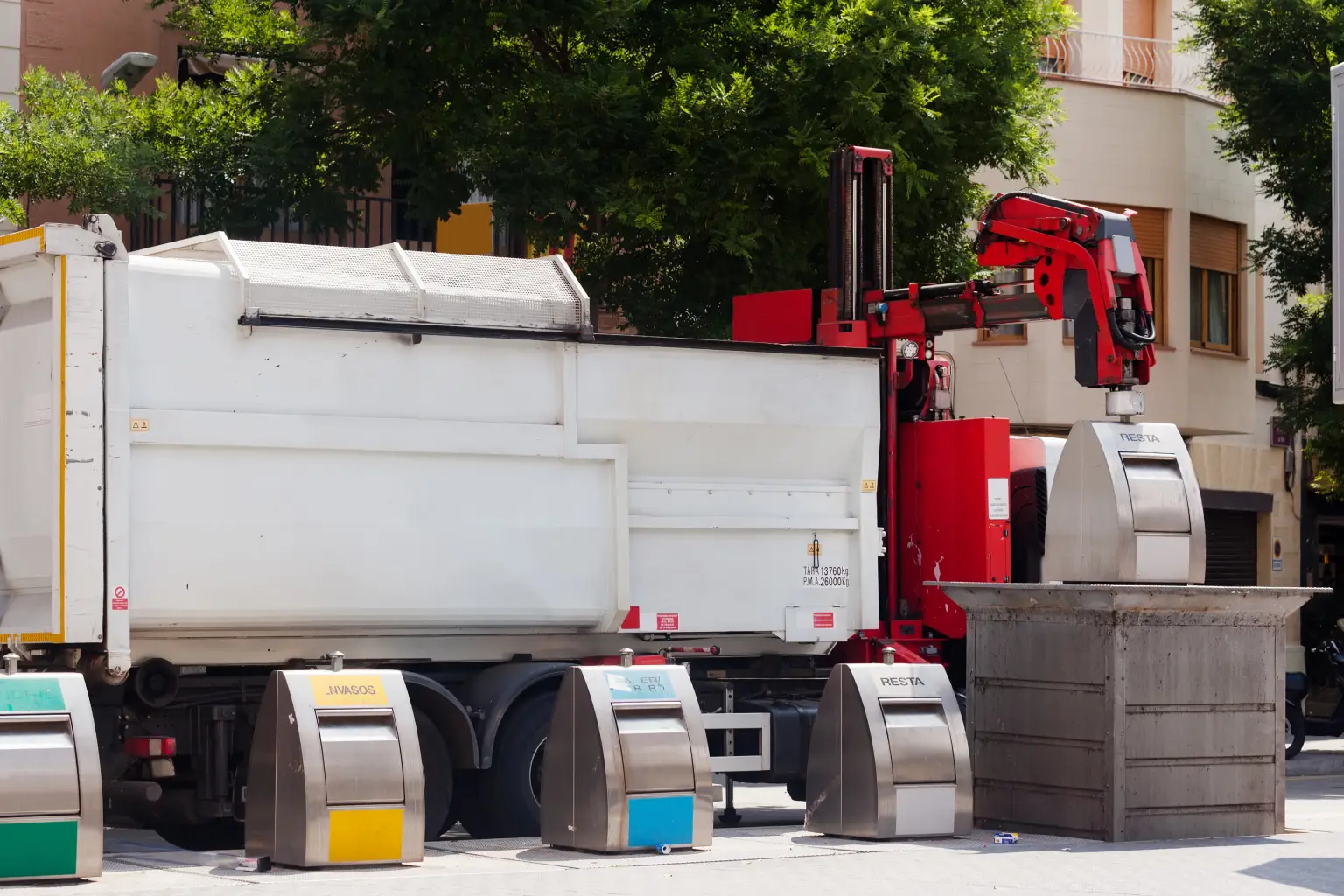


A stained loading dock, storefront walk, or dumpster pad is rarely just a cosmetic issue. Oil tracks can create slip exposure, rust stains can suggest neglected maintenance, and dark organic growth can make a well-managed property look unmonitored. Knowing how to restore stained concrete begins with identifying what entered the surface, how long it has been there, and whether the concrete can tolerate aggressive cleaning without damage.
Commercial concrete restoration is not a one-setting pressure washing task. It is a controlled process that combines inspection, chemistry, water management, equipment selection, and documented follow-through. The right approach improves appearance while protecting joints, coatings, landscaping, adjacent storefronts, and stormwater systems.
Start With the Stain, Not the Pressure Washer
Concrete is porous, even when it appears dense and smooth. Spills move into capillaries below the visible surface, especially on older slabs, broom-finished walkways, and high-traffic service areas. Surface pressure may remove loose contamination while leaving embedded staining behind. In some cases, it can also etch the concrete or create visibly clean stripes that make the overall area look worse.
A site assessment should determine whether the stain is fresh or set, isolated or widespread, and surface-level or absorbed. It should also account for the condition of the slab. Cracked concrete, failing sealers, spalled areas, exposed aggregate, and deteriorated joints all affect the restoration method.
Oil and grease require a different response than rust, tire marks, irrigation stains, paint, efflorescence, food waste, or algae. This distinction matters because no single chemical or pressure setting is appropriate for every stain. Applying the wrong product can set a stain permanently, discolor the slab, damage nearby metal, or create an environmental handling issue.
How to Restore Stained Concrete With a Controlled Process
The most reliable restoration process follows a sequence rather than relying on brute force. Each step is designed to remove contamination while reducing operational and environmental risk.
1. Inspect the surface and define the work area
Walk the site before work begins. Identify stain types, drainage paths, utility covers, door thresholds, landscaping, pedestrian routes, parked vehicles, and sensitive adjacent materials. On commercial properties, this step also establishes the work boundary and helps prevent runoff from leaving the treatment area.
Documenting conditions before service is useful for property managers with multiple locations or shared responsibility among tenants, vendors, and ownership groups. It creates a clear baseline for evaluating results and planning future maintenance.
2. Remove dry debris before applying chemistry
Leaves, trash, gravel, cardboard fibers, and loose soil should be removed first. Cleaning chemistry performs more consistently when it reaches the stained concrete rather than sitting on surface debris. Dry preparation also prevents organic material from moving into drains during the wash process.
At loading zones and dumpster pads, this stage often reveals the actual extent of grease buildup. A surface that looks uniformly dark may have several overlapping stain types beneath loose debris and residue.
3. Match the cleaning agent to the contamination
Petroleum-based oil and grease typically require a commercial-grade degreaser and adequate dwell time. The product needs time to break the bond between the contaminant and the concrete before agitation and recovery. For deeply embedded motor oil or hydraulic fluid, repeated treatment or an absorbent poultice may be necessary.
Rust staining often calls for a carefully selected acid-based treatment. This work requires precision because acid can react with concrete, metal fixtures, glass, painted surfaces, and landscaping. A controlled application, proper dwell time, and thorough neutralization are more important than simply using a stronger product.
Organic staining from algae, mildew, food waste, or leaf tannins requires a treatment that addresses the biological or organic source. Tire marks may respond to a degreaser, heat, agitation, or a specialized rubber-transfer remover. Paint and graffiti require their own removal system and should not be treated as general concrete staining.
The trade-off is straightforward: stronger chemistry can produce faster visible results, but it also increases the risk of etching, color variation, runoff concerns, and surface damage. The best choice is the least aggressive method that can reliably remove the contamination.
4. Agitate where the stain needs it
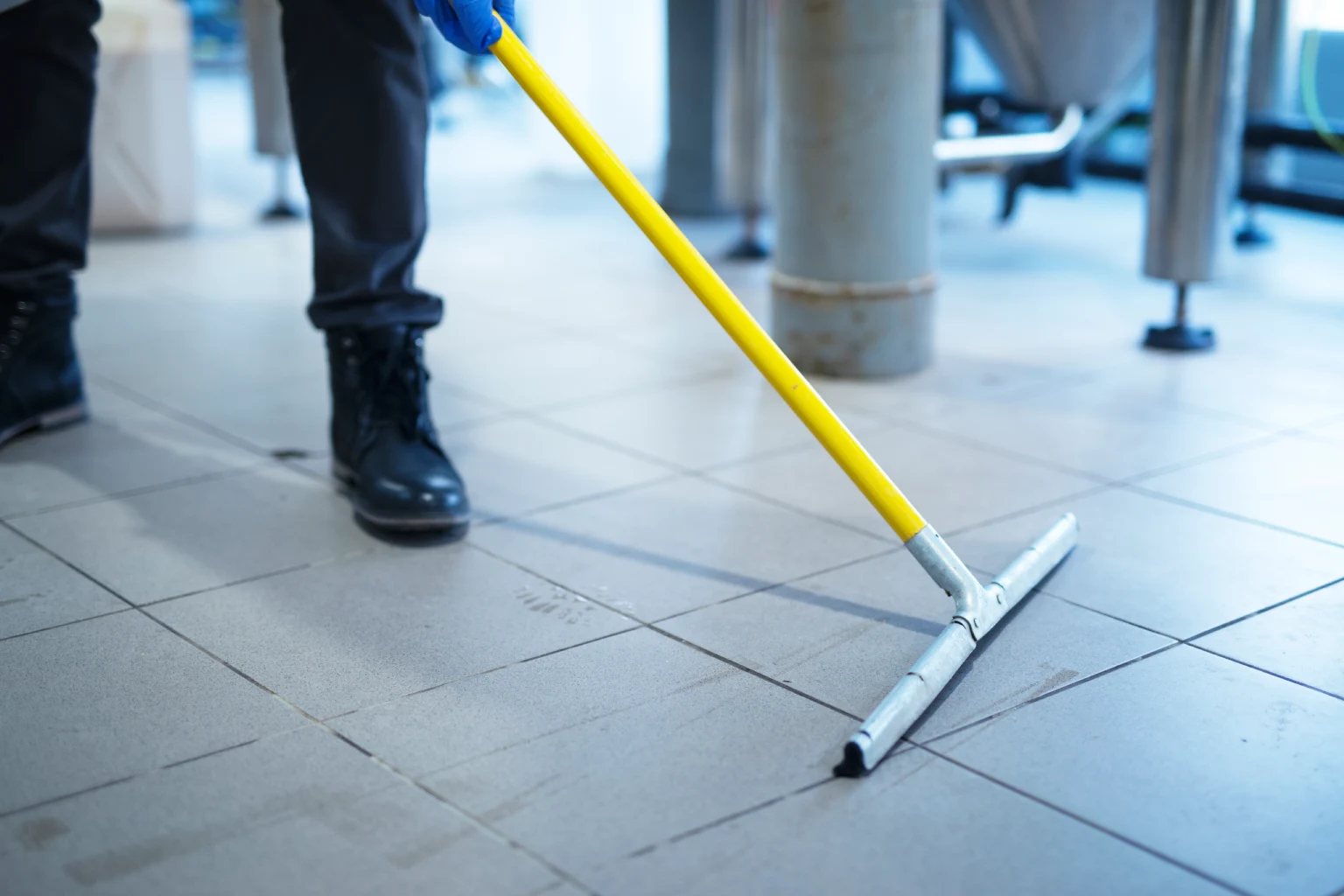
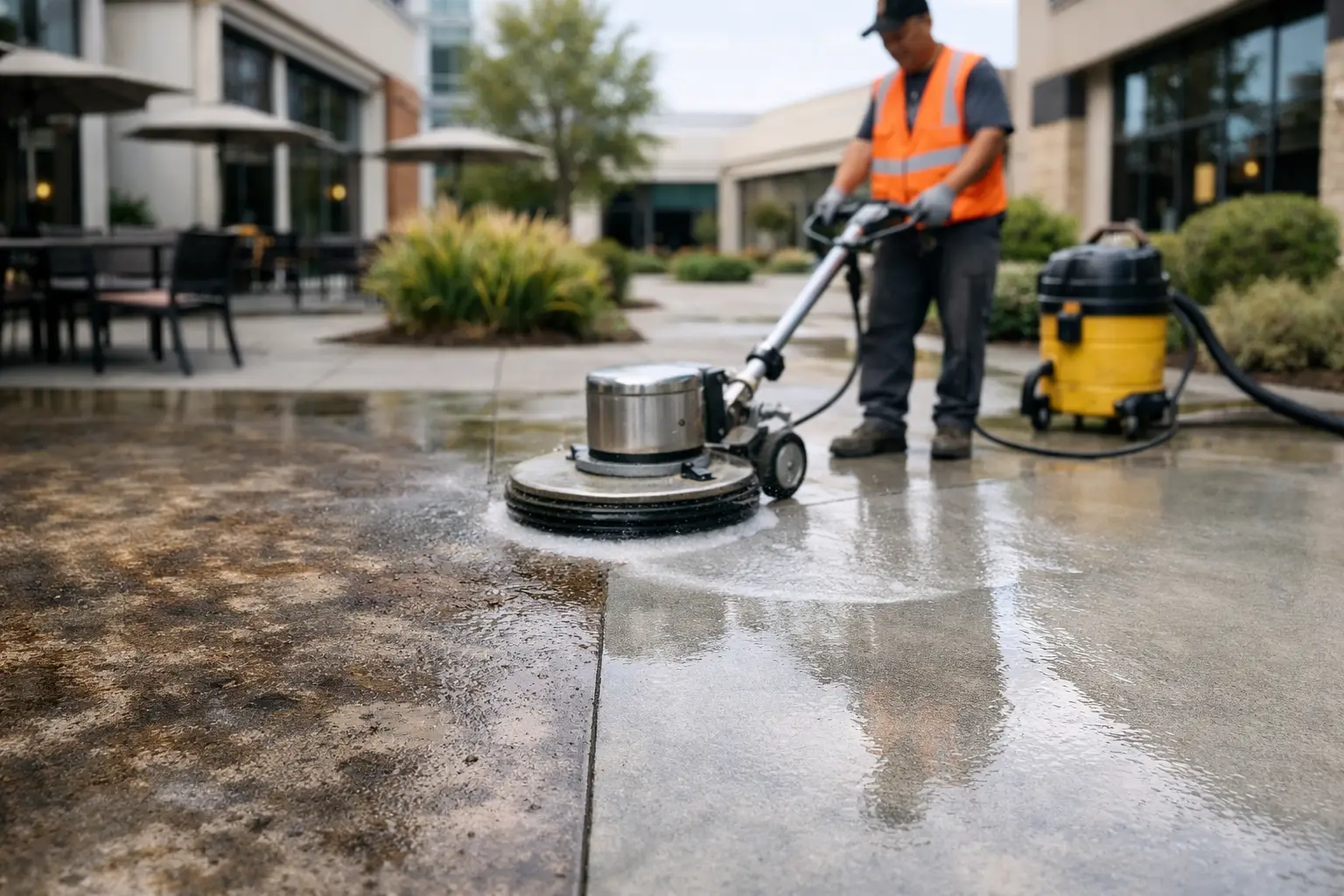
Chemical treatment without agitation often underperforms on textured concrete, dock aprons, and service lanes. Mechanical brushing helps lift softened residue from pores and surface texture. On large areas, rotary equipment or a surface cleaner may provide more consistent contact and reduce operator striping.
Agitation should be scaled to the condition of the concrete. Aggressive brushes and high-pressure tips can damage weakened surfaces, expose aggregate, or worsen spalling. Older concrete may need multiple controlled passes rather than one severe treatment.
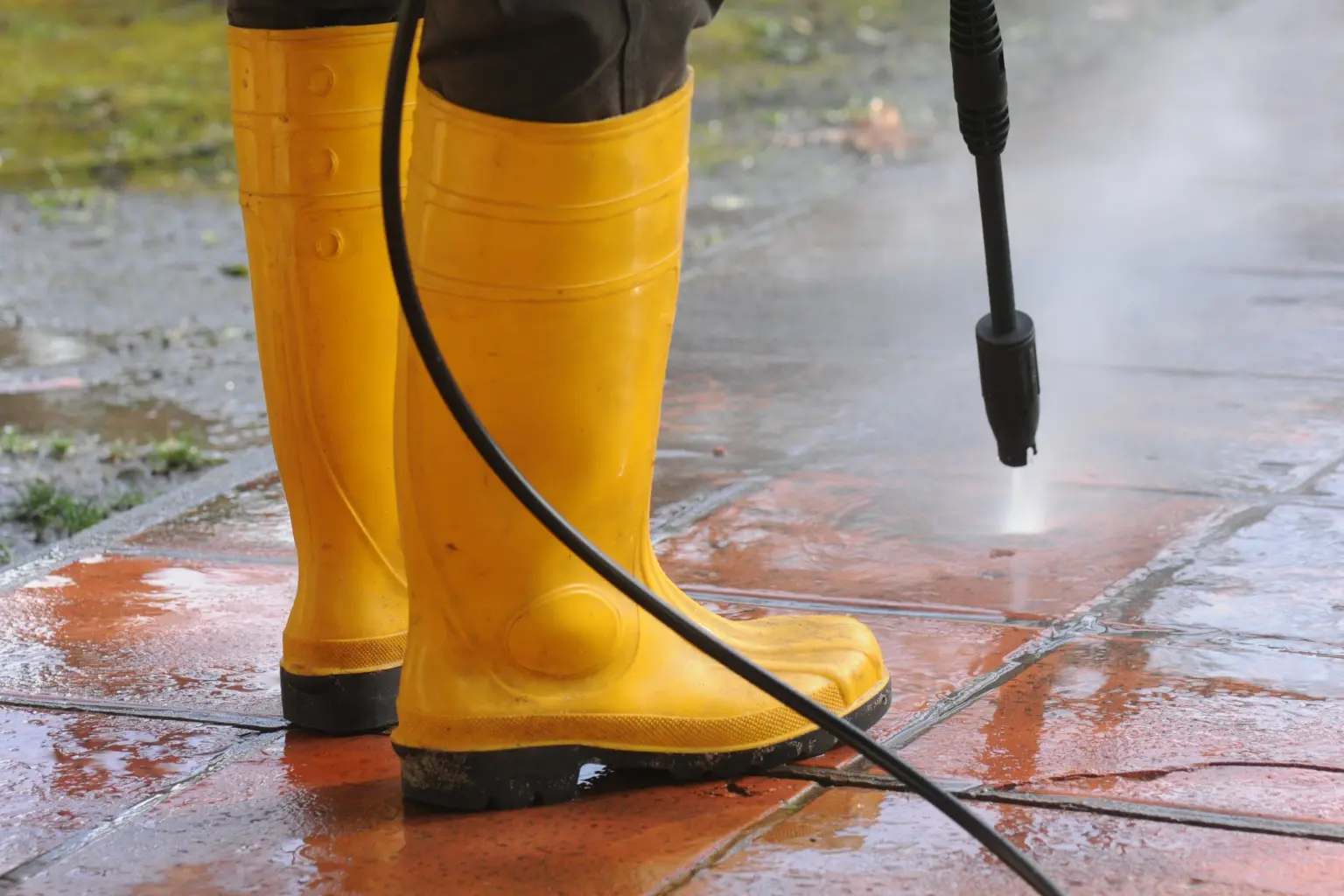
5. Use calibrated pressure, heat, and water volume
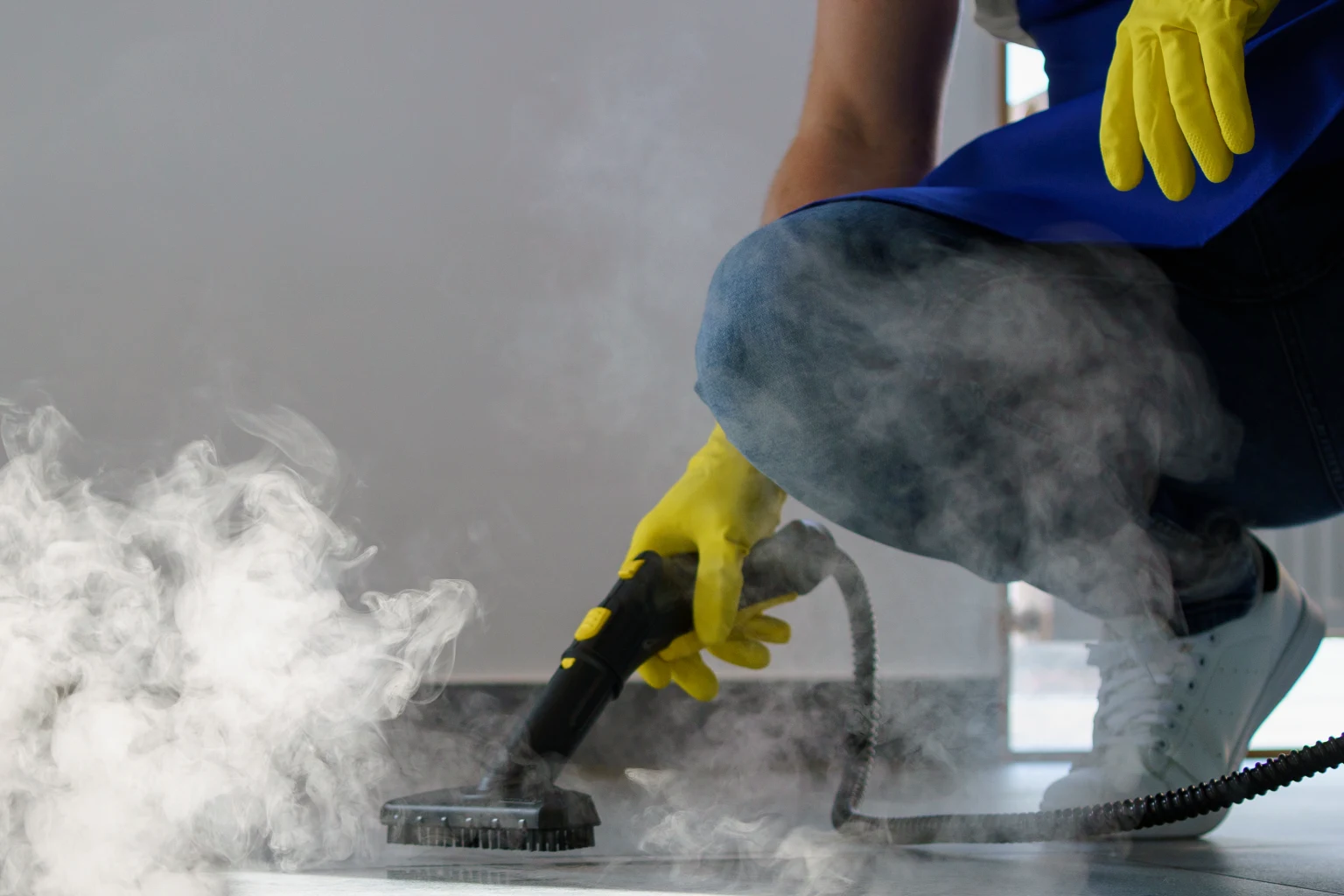
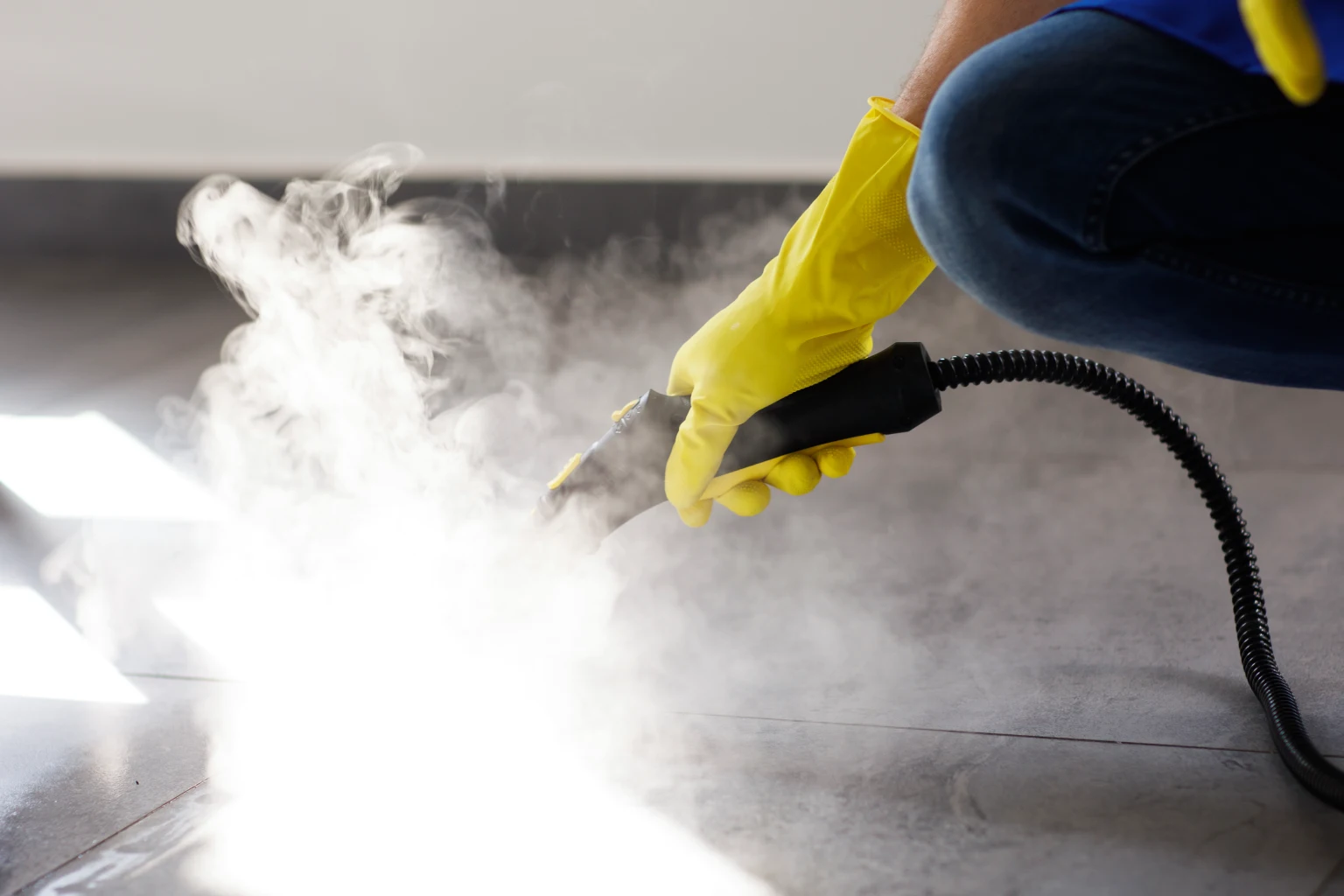
Pressure is only one part of the cleaning equation. Flow rate, nozzle selection, water temperature, stand-off distance, and operator technique affect the outcome. Hot-water cleaning can be highly effective on grease-heavy surfaces, particularly around dumpster pads, restaurant service areas, fuel-related spills, and loading docks.
High pressure alone can leave wand marks, force water into joints, dislodge failing coatings, and push contaminated water into unintended areas. A surface cleaner is often the better option for broad flatwork because it delivers more uniform results and contains splash more effectively. Detail work may still require hand tools and controlled wand cleaning near edges, doors, bollards, and drains.
6. Recover wastewater and protect drainage
Commercial concrete cleaning must account for where the water goes. Wash water containing oil, grease, chemicals, sediment, paint residue, or food waste should not be allowed to enter a storm drain. Proper containment and recovery are core parts of a professionally managed restoration scope, not optional add-ons.
Drain covers, berms, vacuum recovery, and designated disposal procedures help control wastewater during service. The correct setup depends on the site layout, local requirements, stain type, and volume of water needed. A retail sidewalk has different controls than an industrial loading area, but both require attention to runoff.
7. Evaluate the concrete after it dries
Wet concrete can hide residual staining and make a completed area appear cleaner than it will when dry. After the surface has dried, inspect it from multiple angles and under normal site lighting. Some deep stains may require a second treatment, while others may be permanently embedded or tied to prior surface damage.
Set realistic expectations with stakeholders. Restoration can substantially improve stained concrete, but a decades-old slab with repeated oil intrusion, acid damage, or patchwork repairs may not return to a uniform new-concrete appearance. The objective is a cleaner, safer, more consistent surface that supports the property's operating standards.
When Cleaning Is Not Enough
Some stains are symptoms of a larger condition. Persistent white deposits may indicate moisture movement or salt migration. Recurring rust can point to failing metal fixtures, irrigation overspray, or exposed reinforcement. Repeated grease accumulation at a dumpster pad may reflect container placement, leaking equipment, poor enclosure drainage, or insufficient service frequency.
If cleaning produces only short-lived improvement, the property may need a corrective measure beyond washing. That could include repairing cracks and joints, improving drainage, replacing damaged containment equipment, applying a compatible sealer after the concrete has fully dried, or establishing a more frequent maintenance schedule.
Sealers can reduce future staining, but they are not a cure-all. Applying a sealer over embedded contamination can trap discoloration or create uneven appearance. The slab must be properly cleaned, dry, and evaluated for compatibility before protection is applied. High-traffic areas also need a product selected for abrasion resistance and slip considerations.
Build Restoration Into a Maintenance Plan
The lowest-cost approach is rarely waiting until every stain is deeply set. Routine exterior cleaning removes contaminants before they migrate farther into the slab and before property conditions become a tenant, customer, or inspection concern. The right interval depends on traffic, tenant use, food service activity, weather exposure, waste handling, and the visibility of the area.
For many commercial sites, storefront walks and customer-facing entry areas benefit from scheduled cleaning tied to seasonal conditions and traffic levels. Dumpster pads, loading docks, and service corridors may require more frequent attention because they receive concentrated grease, waste, tire traffic, and equipment activity. Multi-site portfolios benefit from consistent scopes, documented work orders, service photos, and centralized scheduling.
Einstein Surface & Environmental Services approaches stained concrete as a managed surface-restoration issue: assess the condition, control the work area, apply industrial-grade methods, recover wastewater, and document the result. That operating discipline matters when a property team needs consistent execution across high-visibility and service-heavy locations.
The most useful next step is not choosing the strongest cleaner on the shelf. It is identifying the source of the stain, setting a restoration standard for the area, and putting a maintenance process in place before the concrete becomes a recurring operational problem.