












A stained storefront walkway does more than look neglected. It changes how customers read the property before they ever reach the door, and on high-traffic retail sites, dirty concrete can also create slip risk, embed gum, hold oil, and accelerate surface wear. If you are deciding how to clean storefront concrete, the right answer depends on traffic volume, stain type, drainage, surface age, and how much disruption the site can tolerate during service.
Storefront concrete is not the same as cleaning a back patio or a small residential driveway. Commercial entrances deal with constant foot traffic, food and beverage spills, grease tracked from parking areas, tire transfer near curbs, rust from fixtures, irrigation staining, and organic buildup in shaded sections. The cleaning method has to restore appearance without etching the surface, forcing water into entryways, or creating problems for tenants and customers.
How to clean storefront concrete without damaging it
The first step is identifying what is actually on the surface. General darkening from traffic needs a different approach than oil drips, gum deposits, algae, fertilizer stains, or rust. On many retail properties, the worst visual issue is not one dramatic stain but layered buildup that dulls the concrete across the full storefront line. That usually calls for a combination of detergent treatment, controlled surface cleaning, edge work, and rinse recovery planning.
Pre-treatment matters more than most people expect. If grease, beverage residue, or organic growth is present, applying the correct cleaner and allowing proper dwell time can do more for the final result than simply increasing pressure. High pressure alone may remove loose soil, but it often leaves shadowing in porous concrete and can scar the surface if the operator compensates by getting too aggressive.
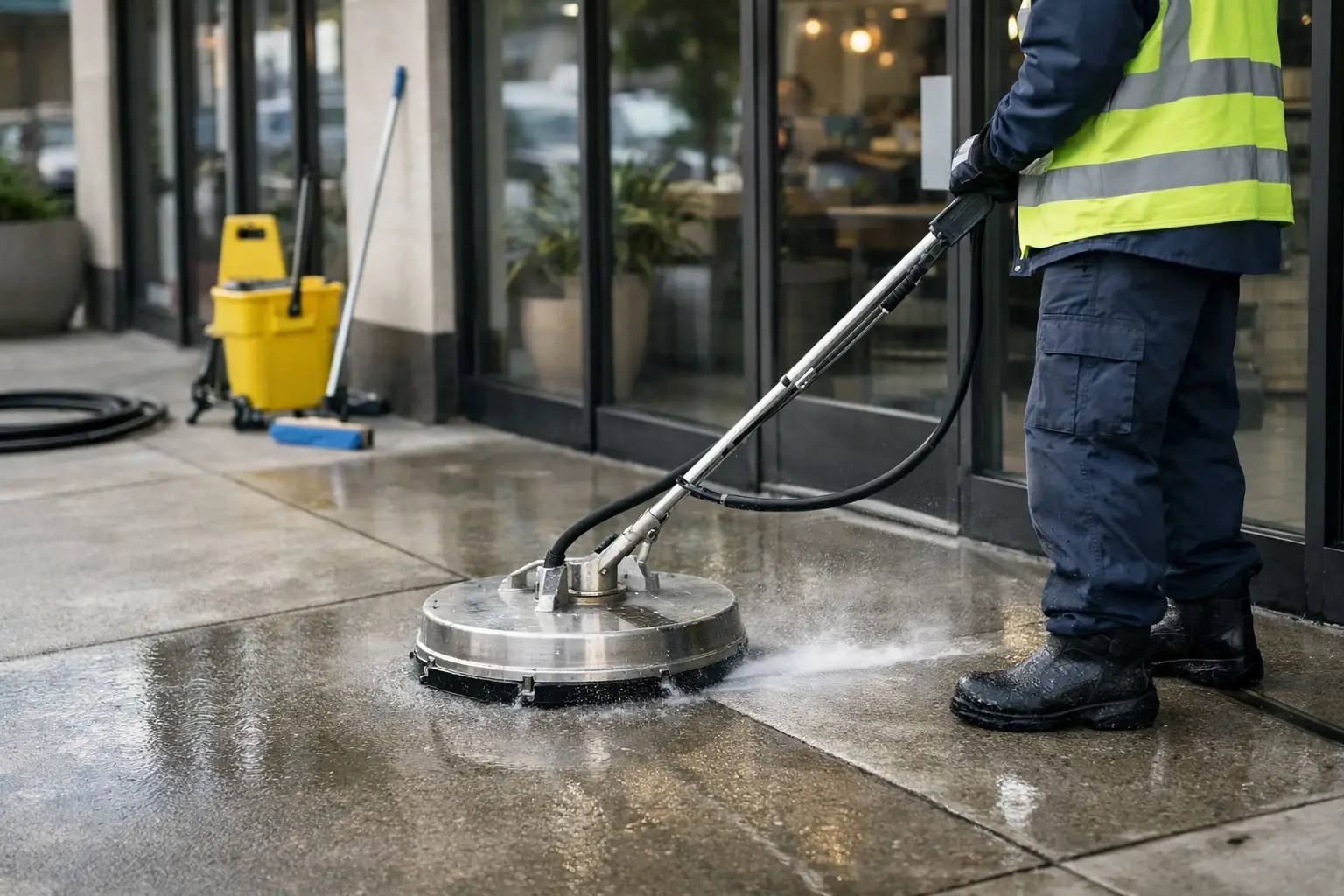
For most storefronts, professional cleaning starts with dry debris removal, followed by spot treatment of stains and then rotary surface cleaning. A rotary surface cleaner distributes pressure more evenly than a wand alone, which helps produce a more uniform finish across pedestrian concrete. Wand work still has a place along edges, corners, curb lines, and tight areas near columns or door thresholds, but broad open sections generally clean more consistently with the right surface cleaning equipment.
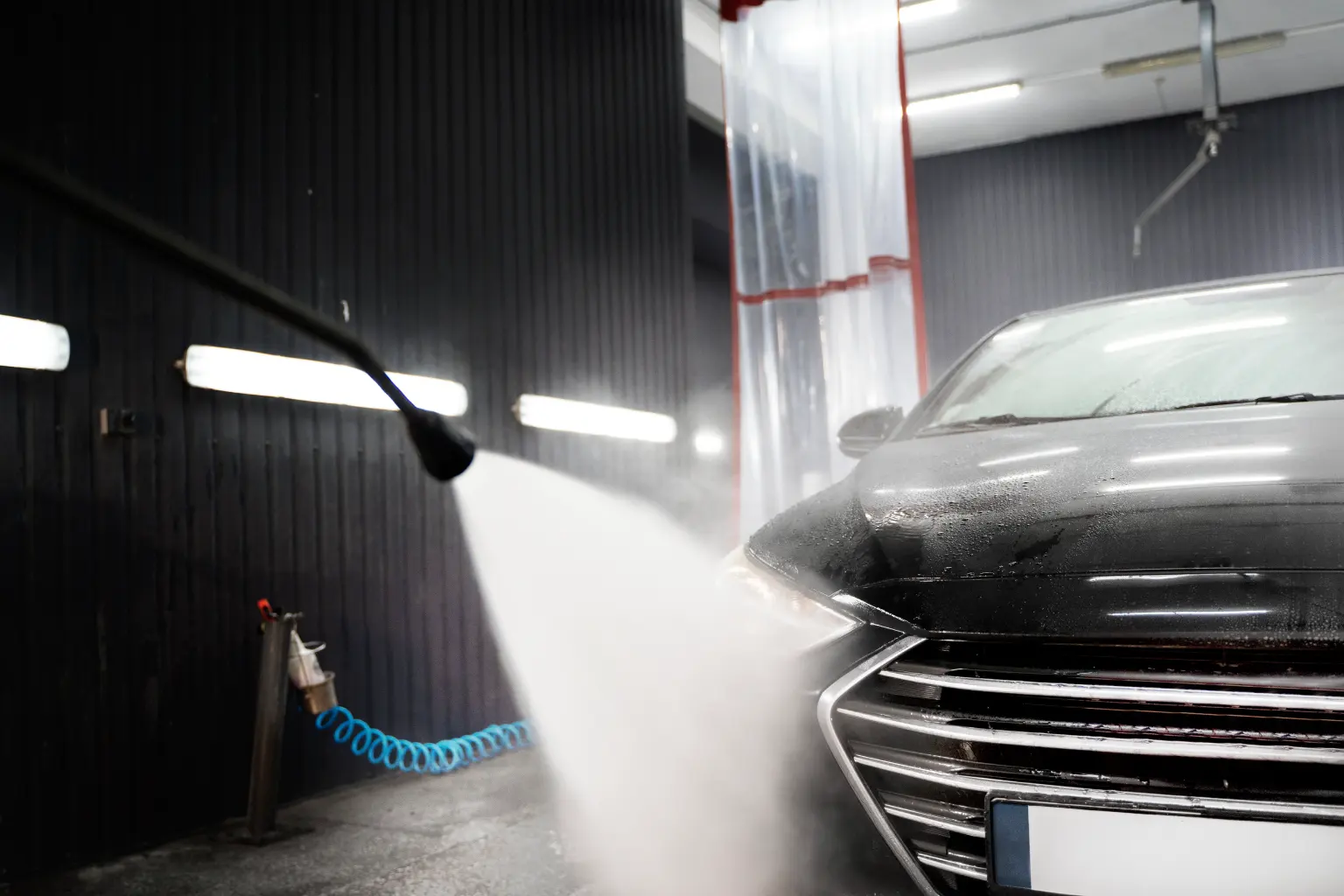
Water volume is as important as pressure. Commercial concrete often responds better to a balanced setup with sufficient flow, controlled pressure, and chemistry selected for the soil load. Too little pressure can leave embedded dirt behind. Too much can stripe the slab, expose aggregate prematurely, or damage weak joints and patched areas. Older concrete, decorative finishes, and previously repaired sections always require more caution.
What cleaning method works best for storefront concrete
There is no single answer because storefront conditions vary by tenant type and property layout. A coffee shop entrance with sugar residue and gum behaves differently than a medical office walkway with irrigation staining, or a retail strip where oil and tire marks accumulate near the curb. The best method usually combines four elements: inspection, chemistry, mechanical cleaning, and controlled wastewater management.
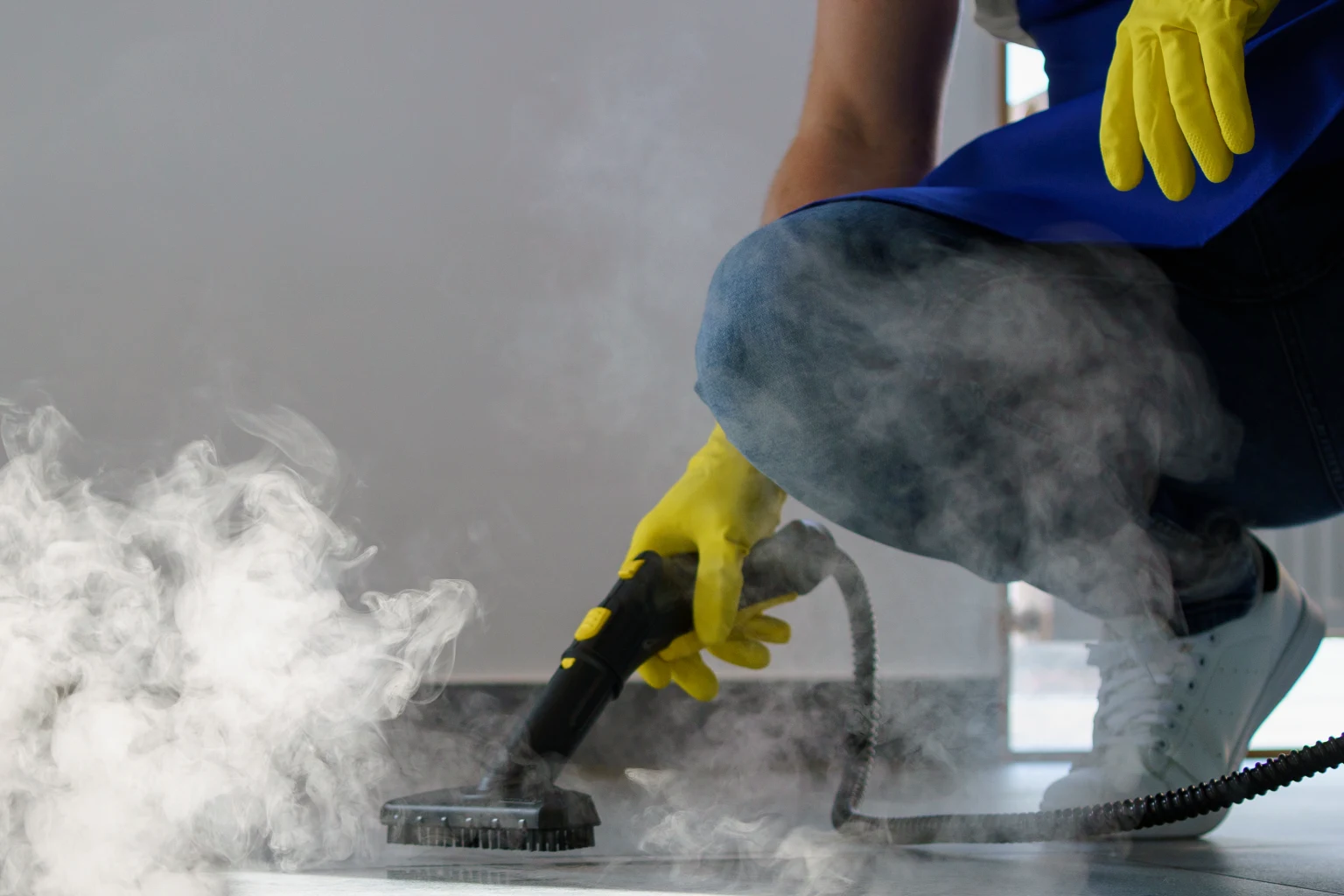
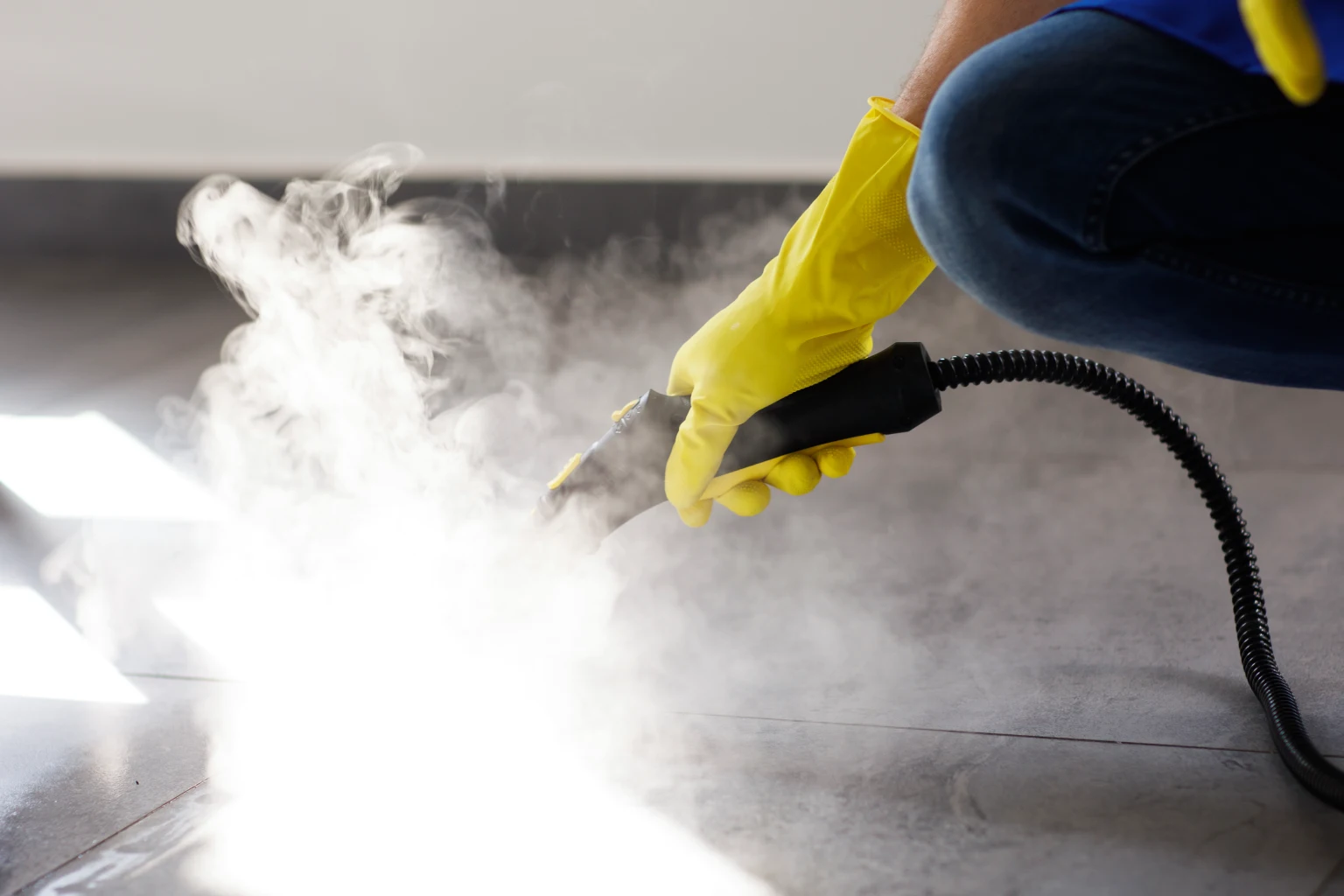
Hot water is often more effective than cold water where grease, food residue, and gum are part of the cleaning load. It improves breakdown of oily contaminants and can reduce the need for excessive pressure. That said, heat is not automatically necessary on every site. For light soil, routine maintenance cleaning with the right detergent and equipment may be sufficient. The operational question is whether the goal is maintenance appearance improvement or deeper restorative cleaning.
Detergent selection should match the stain. Degreasers help with petroleum residue, while rust removers are formulated for mineral staining. Organic treatment is useful where mildew or algae is present, especially in shaded storefronts or along irrigation lines. Using the wrong chemistry can waste time, produce uneven results, or discolor adjacent materials such as painted curbs, metal frames, or landscaping.
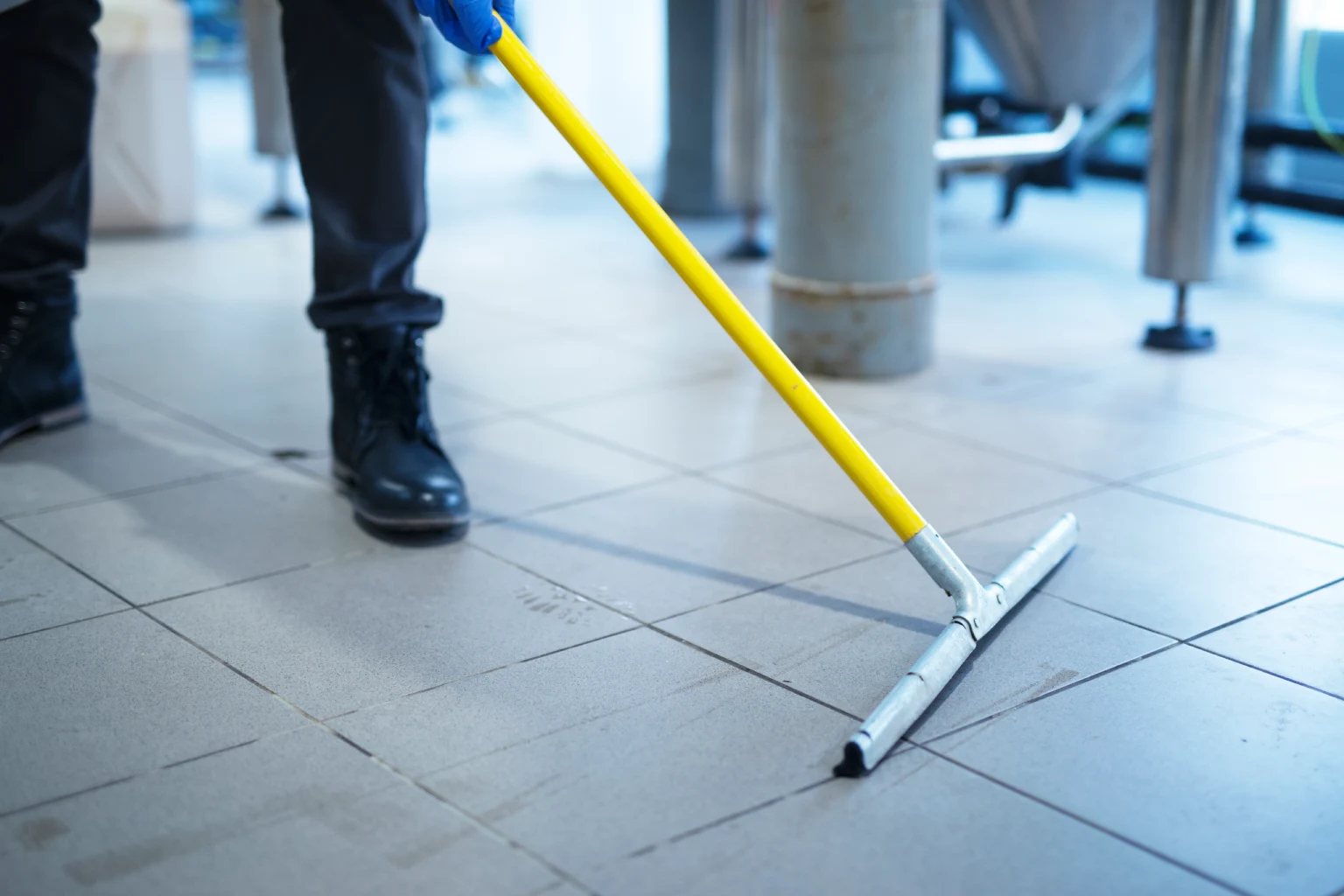
Scrubbing is sometimes necessary for isolated stains, but it should not replace a structured process. If the concrete has widespread discoloration, hand work alone usually produces inconsistent results and increases labor without solving the full appearance issue. On high-visibility commercial sites, consistency across the entire frontage matters just as much as removing the obvious stain near the entrance.
Common storefront concrete stains and how they should be handled
Oil and grease are among the most common issues near curbs, pickup areas, and service-adjacent storefronts. Fresh spills respond better than old embedded staining, so timing matters. A degreasing treatment followed by hot water cleaning is often the best path, but older petroleum stains may lighten rather than disappear completely. That is a realistic expectation on porous concrete that has absorbed contamination over time.
Gum removal is a separate task, not a side benefit of a standard rinse. If gum is heavily concentrated, it usually requires heat, targeted removal methods, and more detail time than general walkway cleaning. Retail centers with food traffic should account for this in the maintenance schedule rather than waiting until buildup becomes visually dominant.
Rust stains often come from metal furniture, sign bases, irrigation components, or battery-related runoff. These should be treated carefully because aggressive washing will not remove rust on its own. Acid-based products can help, but they need to be used with control around adjacent finishes and landscaping. The wrong application can trade one stain problem for surface damage.
Organic staining shows up as green or black growth in shaded areas, around planters, and near moisture-prone corners. This is not just an appearance issue. It can contribute to slick conditions, especially in humid periods or after irrigation cycles. Organic treatment should address both the visible growth and the conditions feeding it, or the problem will return quickly.
Operational concerns commercial properties should not ignore
Cleaning a storefront is not just about making the slab brighter. It has to be done in a way that protects customer access, reduces slip risk during and after service, and avoids pushing dirty water into tenant spaces or public pathways. Entry points, floor drains, slope direction, and pedestrian timing all affect the job plan.
Early morning or off-hours service is often the best fit for active retail sites. It allows proper setup, pre-treatment dwell time, and complete rinse work before customer traffic ramps up. On multi-tenant properties, this also helps avoid conflicts with opening procedures, deliveries, and sidewalk use. A managed service schedule is usually more efficient than reactive cleaning after conditions become visible enough to trigger complaints.
Wastewater control is another practical issue. Depending on site conditions, runoff may need to be contained, redirected, or recovered rather than freely discharged. This is especially relevant near landscaped areas, storm drains, and food-service storefronts. Professional exterior cleaning on commercial properties should account for environmental handling as part of the work, not as an afterthought.
There is also a brand standard issue. A storefront with partially cleaned concrete or visible striping can look almost as bad as one that was never cleaned. Precision matters because customers notice the entrance zone more than most other exterior surfaces. It is one of the few property areas where aesthetics, safety, and tenant perception all meet in a very small footprint.
When in-house cleaning works and when it does not
If the storefront is small, lightly soiled, and cleaned frequently, in-house teams may be able to manage basic upkeep with appropriate tools and approved cleaning products. Sweeping, spot treatment, and routine rinse-downs can help slow buildup. This works best when the goal is maintenance between professional service intervals, not full restoration.
Where in-house efforts usually fall short is on embedded staining, large frontage areas, gum accumulation, grease, rust, or sites that need consistent results across multiple locations. Consumer-grade equipment rarely delivers the heat, flow, surface coverage, or stain treatment capability required for commercial concrete restoration. It can also create risk if untrained staff etch concrete, damage adjacent materials, or leave slick residue behind.
For facility managers and property managers, the real calculation is not only labor cost. It is whether the work can be completed to standard, on schedule, with documentation, and without creating avoidable issues at the storefront. That is why many commercial clients move from occasional cleanup to a managed maintenance program. Einstein Surface & Environmental Services is built around that model, combining industrial-grade field execution with structured scheduling, work order control, and repeatable service delivery.
How often storefront concrete should be cleaned
Frequency depends on tenant mix, traffic, weather exposure, and the visual standard of the property. A restaurant-adjacent storefront may need monthly or even more frequent service, while a lower-traffic professional office frontage may hold up well on a quarterly schedule. Properties with irrigation overspray, tree cover, or recurring gum traffic usually need shorter intervals.
The better approach is to set a maintenance cycle based on how the site soils in real conditions, not on a generic calendar. If concrete is cleaned only after it becomes noticeably stained, restoration costs tend to rise and results become less predictable. Routine service preserves appearance more efficiently than occasional aggressive cleaning.
A clean storefront concrete surface supports more than curb appeal. It protects the customer approach, reflects operating standards, and helps the property present as actively managed. When the cleaning method matches the soil load, the traffic pattern, and the site constraints, the result is not just cleaner concrete. It is a frontage that performs the way a commercial entrance should.